




What You Didn’t Know About Your Own Body
Our research findings about the things you thought you understood about your health.
The Data Doesn’t Agree With Common Sense
We take a lot of things for granted about our health. It’s common knowledge that alcohol is bad for your sleep, that melatonin helps you sleep better, and that heat and cold exposure improves your overall health.
But what if we told you that our research findings challenge these conventional wisdom. That alcohol has close to zero effect on sleep stages and that melatonin doesn’t improve your sleep stages at all?
Our research so far this year challenges a lot of the conventional wisdom and myths around your health.
What is Terra Research?
Terra Research is the research function of Terra. We exist to help people make better decisions about their health by analysing large-scale wearable data, publishing our findings, and building analytics products for customers who want our expertise.
The idea was born when Alistair went for a walk with Kyriakos around the Salesforce Garden in San Francisco early last year. They quickly built a research outfit dedicated to surfacing insights from health data and helping people live healthier lives.
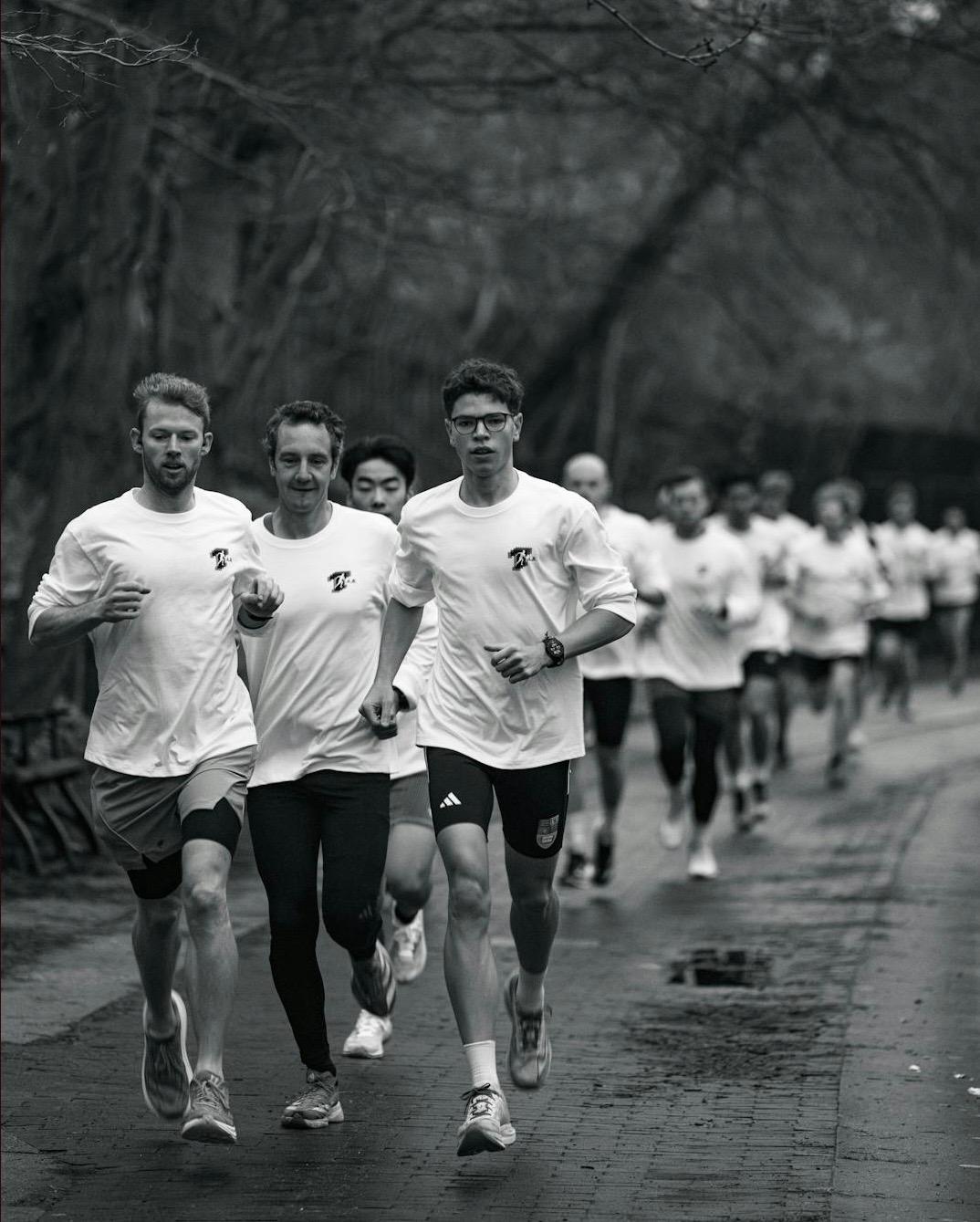
We also run the Terra Research Club — a series of regular events where we conduct live experiments on our analytics. It’s research in the open, testing our ideas with real people, and it keeps us honest about whether what we’re building actually works.
That spirit, curiosity first, humility always, is what drives everything we publish.
The Authors
This report was written with contributions from these authors, as part of the Terra Research Insights team.

Alistair Brownlee
Head of Terra Research

Faraaz Akhtar
AI & Health Researcher

Rocio Mexia Diaz
AI & Health Researcher

Cameron Crawford
AI Engineer

Halvard Ramstad
Editor-in-chief

Jehyun Kim
Research Contributor
What We Found
We asked simple questions — Why is a country with less than 5 million inhabitants completely dominating the Olympics? Does Melatonin have any effect on sleep? Do Saunas actually improve your biomarkers, despite all the hype?
A lot of our findings challenge conventional wisdom.
New Year's Resolutions
Two-day cliff
New Year's sleep resolutions show up in the data but fade in about two days. The commitment curve is steeper than anyone expected.
Alcohol
+5.5 min awake time
The total hours slept are less affected by alcohol. But you wake up more, linger in lighter stages, and the quality is quietly degraded.
Melatonin
0 effect on sleep stages
Over 200,000 nights of data suggest melatonin doesn't reshape your sleep the way most people think it does.
Endurance Training
Norway's Olympic dominance
Norway won more medals per capita than any country at the 2026 Winter Olympics. The answer lies in a nation-wide training culture.
Sauna
3-5 bpm RHR drop
Regular sauna use is linked to a measurable drop in resting heart rate. We looked at the data to see how much and how fast.
Women's Health
The PMS signal
Breathing rate spikes days before PMS symptoms appear. It's one of the most reliable physiological signals of the menstrual cycle.
The surprise was who tried hardest. The least-active quartile showed gains of 25 percent, while already-active users barely moved. The people with the most to gain vanish fastest.
The variation is not just about duration. Night-to-night consistency differed dramatically. The UK and US had the most erratic sleep, with standard deviations above 3 hours, while Austria and Ireland were the steadiest sleepers. And weekends reshuffled everything: US users actually slept less on Friday and Saturday nights, while Italian users trended half an hour more. Same biology, completely different sleep cultures.
The practical takeaway is counterintuitive. The biggest effect of alcohol on sleep in real-world data isn't the stage-level disruption you'd expect. It's fragmentation. You spend more time awake in bed, you wake up more often, and your body lingers in light transitional states where it isn't really recovering. The total hours look fine. The quality underneath is quietly degraded.
The practical takeaway is simple. Melatonin is not a sleep pill. It is a short-lived shift in your autonomic nervous system, a temporary nudge toward recovery that wears off quickly. If you are taking it expecting to sleep longer or fall asleep faster, the data says you are solving the wrong problem. But if you think of it as a brief recovery window, something that gives your cardiovascular system a few days of improved tone, then the data actually supports that. Just do not expect it to last.
The effect is consistent through the night. In the first hour after sleep onset, heart rate on sauna nights rapidly decreases creating a gap between sauna and non-sauna nights of 3 to 5 bpm. For women, the story gets more nuanced. The heart rate benefit only appears during the luteal phase of the menstrual cycle, with no meaningful effect during the follicular phase. This suggests the recovery mechanism interacts with hormonal state in ways we are only beginning to understand.
1/10 Americans use GLP-1s daily. How does it affect your training and recovery?
What surprised us most was what exercise could and could not fix. Fitter individuals showed smaller heart rate increases, but HRV did not follow the same pattern. It dropped and stayed suppressed regardless of fitness level. Heart rate and HRV are telling two different stories.
Baseline fitness partially offsets the heart rate increase, fitter people show a smaller rise, but HRV stays suppressed regardless. There also appears to be a sweet spot: small increases in training load, around 30 minutes above baseline, show minimal impact. Push beyond that, and heart rate climbs while HRV stays lower.
Does training harder actually make you faster?
“My research explores how movement makes us healthier, a question I’ve asked for years as my own n=1 experiment as a professional athlete”Two-time Olympic Champion, Alistair Brownlee
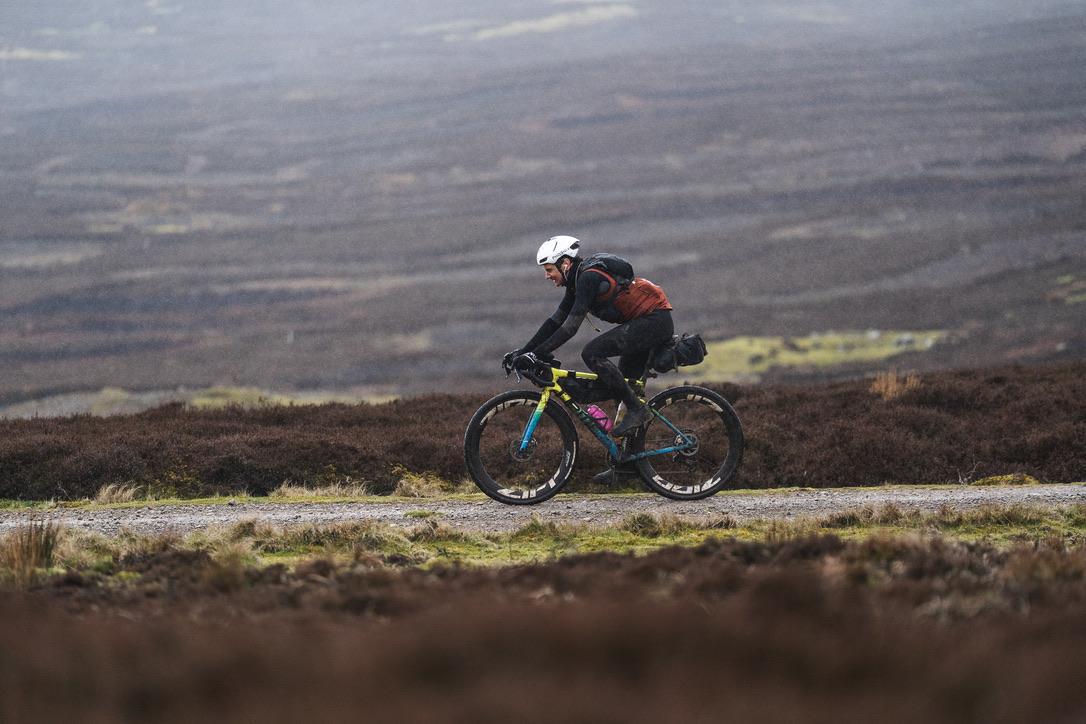
The runners who hammer race pace in training actually get slower. The more time they spend in Zone 3, the worse their finish time. Meanwhile the ones who take it easy for most of their training and only go hard occasionally are the ones crossing the line first.
Even the least active Norwegians spend more time in low-intensity zones than low-activity users elsewhere. The whole population moves differently. We hypothesize that this leads to the largest pool of talent at the base of the talent pipeline pyramid and demonstrates that a strong culture that emphasizes being outdoors and moving positively impacts elite performance.
The single biggest predictor is your baseline pace. It accounts for more than half the model's power on its own. After that, the split between easy and hard running matters more than most people think. Spending 75 to 85% of your volume in zone 1 produces outsized improvements. Going hard more than 20% of the time actually makes you slower.
This calculator is a rough prototype, not gospel. It's off by about 18 minutes on average. But it's a useful way to play with the tradeoffs and see how different training choices might shift your finish time. It refers to the 6 months of training before your marathon (the total distance covered during this period). Zone 1 includes any pace 10% or slower than your marathon pace.
Are we looking at women’s physiology the wrong way?
“I used to think my period was just one bad day but our ups and downs are normal. The real question is: Is a low lower than usual?”AI & Health Researcher, Rocio Mexia
What makes this finding more interesting is the PMS split. If you are someone who reports PMS symptoms, the breathing rate spike is noticeably sharper and taller. And after your period starts, instead of settling back to normal like it does for non-PMS users, it stays erratic for days. The body is signaling something is off well before you consciously feel it. This has practical implications: breathing rate could serve as an early, objective warning system for PMS onset, something no subjective symptom tracker can reliably do.
Temperature is different. It follows a clean 28-day wave that repeats month after month. The signal was so strong we could actually distinguish biological sex from temperature data alone, without anyone self-reporting. If you want to build cycle tracking into a health product, temperature is the metric that matters.
Join Our Research Club
This spring taught us that the body is more responsive, more measurable, and more surprising than most of us give it credit for. Melatonin works, just not the way we expected. Training harder doesn’t mean racing faster. The menstrual cycle reshapes almost every recovery metric, but performance holds its ground. And even our best intentions, the New Year’s resolution, the January step count, fade in days, not weeks. The data doesn’t lie, but it doesn’t always say what we assumed it would.
If you want to go deeper on any of this, join the Terra Research Club — we run regular events where we test these ideas live, with real people and real data.
See you next season.