It's not a secret that influencers play a big role in marketing a fitness app. Even one of the world's most famous athletes, Cristiano Ronaldo, is an investor in WHOOP and its global ambassador.
However, most early founders won’t have the budget for celebrity creators. One of the fastest growing health apps of the last two years started its influencer approach with only $2,000, and has stuck to the same formula, going from 0 to 5M downloads in its first year and to 15M by the end of its second.
In our analysis we went back to the early beginnings of Cal AI, to understand their rapid growth and how their built their GTM engine.
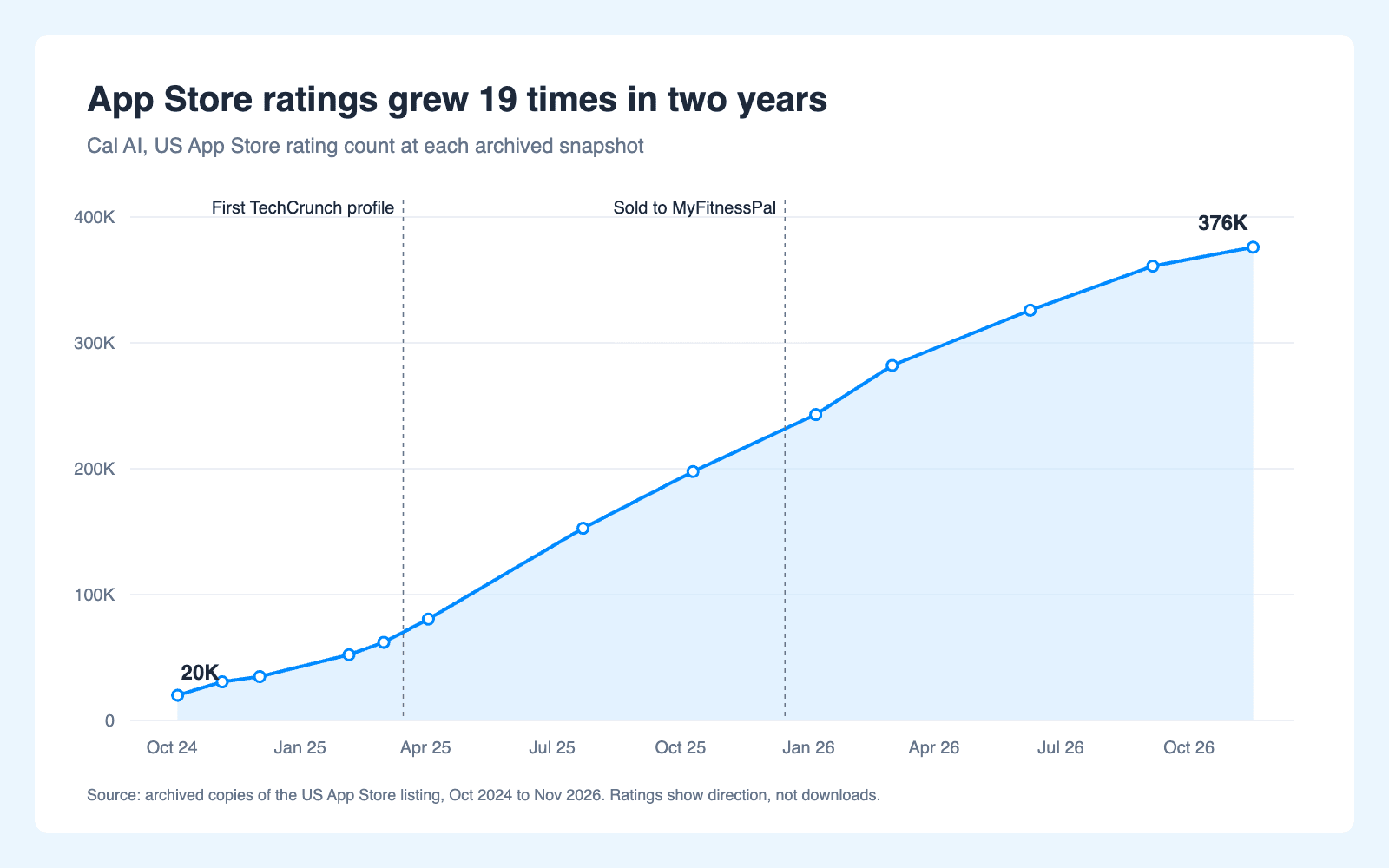
Quite recently, on 15 October 2026, Zach Yadegari, the founder of Cal AI, sat on a stage at TechCrunch Disrupt and explained how his calorie app had paid its way to millions of downloads. The same week Jake Castillo, who ran the app's creator deals, spent an hour on a podcast going through the numbers, including the ones that didn't work.
I think Cal AI's growth was worth analysing for two reasons. First, creator-made video is how several of the fastest growing health apps got started, before they spent anything on paid ads. Cal AI says it reached $1 million a month on creator posts alone, and only added paid ads about a year in. MenuFit's founder sent out roughly 500,000 PDF guides from six videos before his app existed, and ran no paid ads for its first three months. Ladder grew one coach's TikTok account to 250,000 followers in 45 days before it bought a single ad.
Three of the apps in today's US Health & Fitness top 100 lean on creator-made video in one form or another:
- MenuFit: number 14 on the free chart, 54,594 ratings in its first 15 months, and an estimated $1 million a month in revenue
- Ladder: number 2 by revenue, with more than 300,000 paying subscribers by its own count, running ads from its coaches' own accounts
- Finch: number 24 on the free chart, with 778,774 ratings
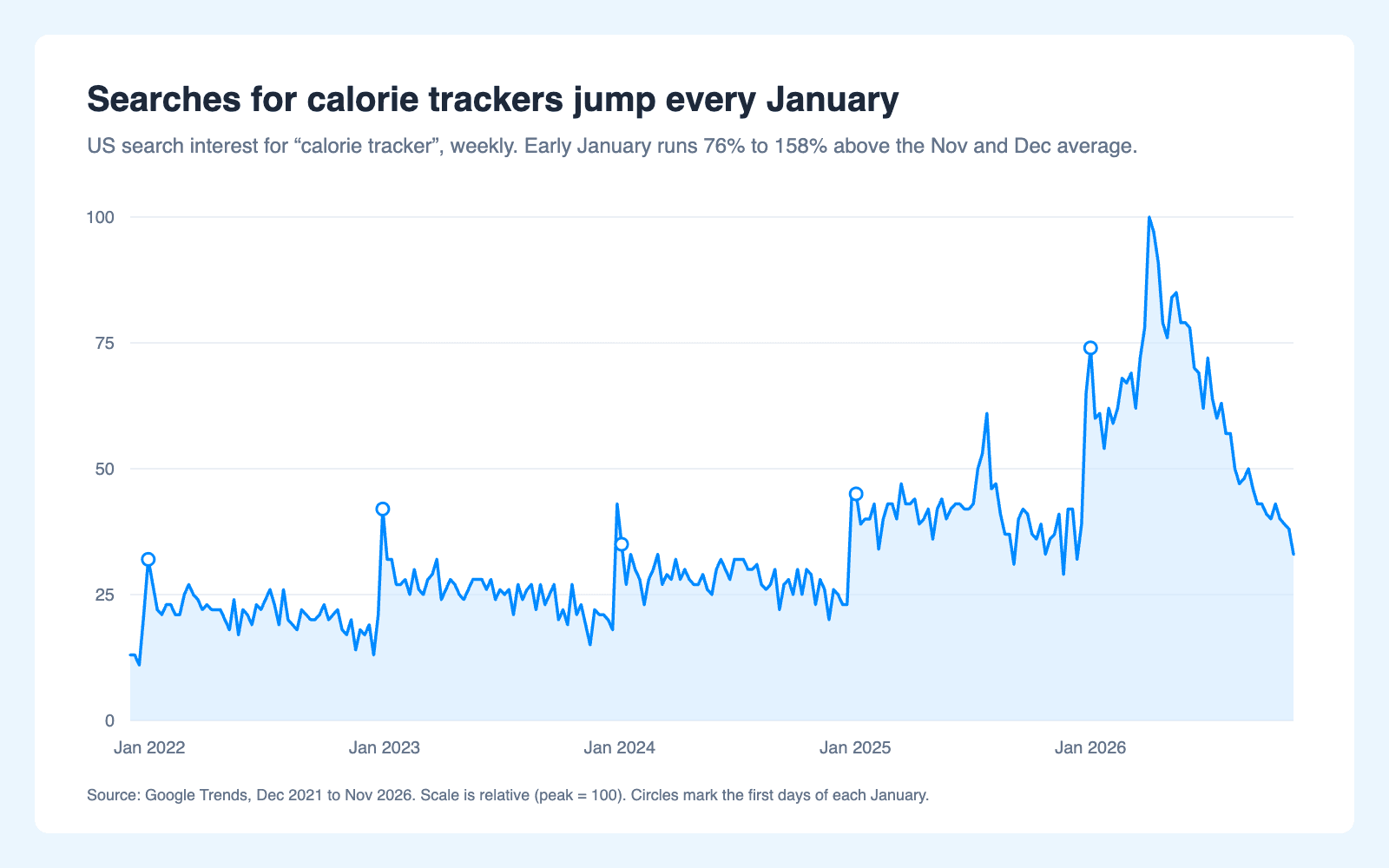
The second reason is timing. January is the biggest month of the year for nutrition and weight loss apps. In each of the last five years, US searches for "calorie tracker" in the first days of January were between 76% and 158% higher than the November and December average. I think we all agree that weight loss and training goals are set just before the new year begins, so this window matters most for nutrition and weight loss apps.
Now the thing that strikes me with Cal AI is that throughout the two years, their formula for growth has not changed dramatically, and still their growth is insane considering it was built by 4 people, 2 of them being teenagers at the time.
The story starts in the spring of 2024, when four co-founders (two of them teenagers) paid a fitness creator about $2,000 to post one Instagram story. The creator story is simple:
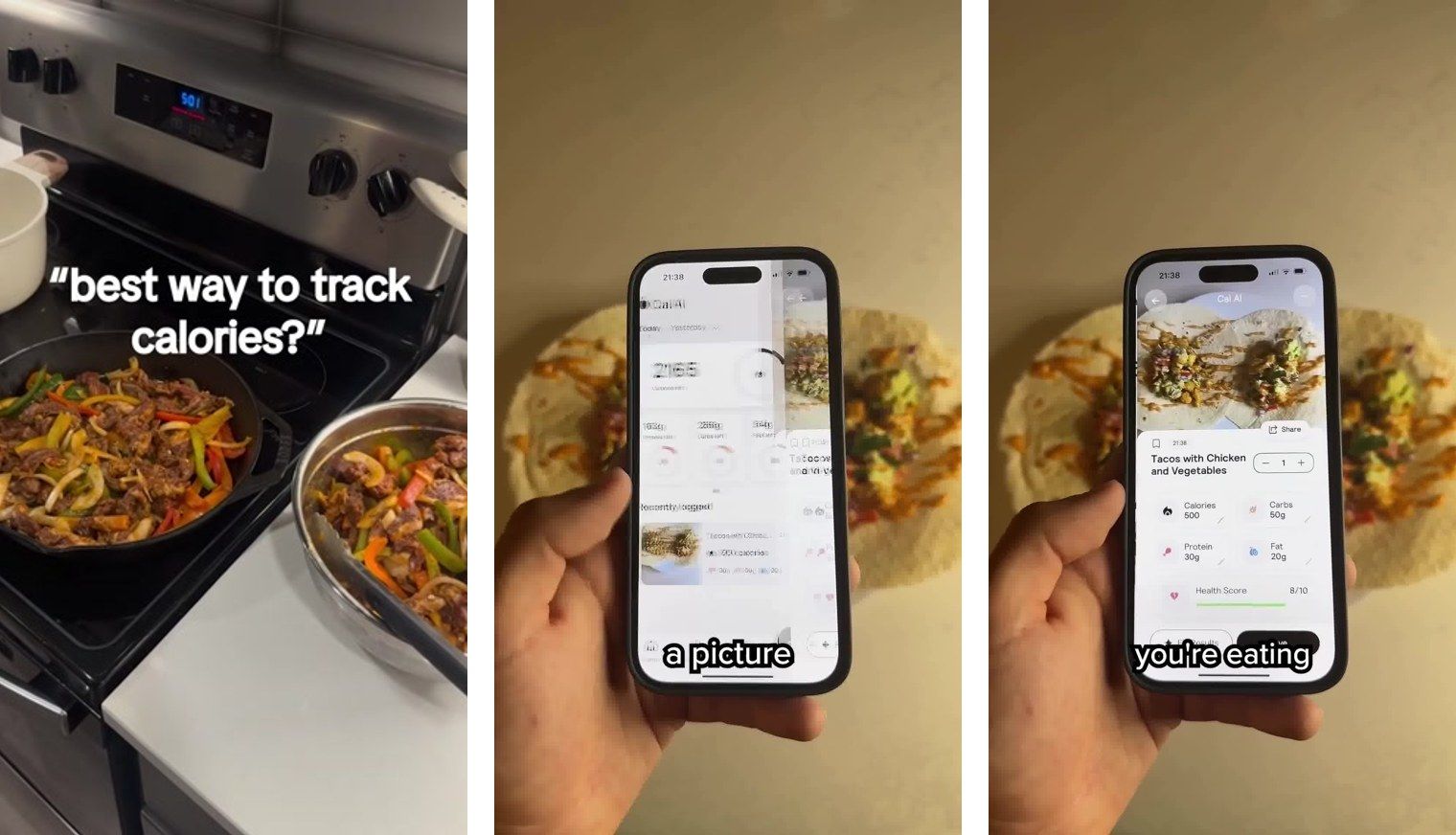
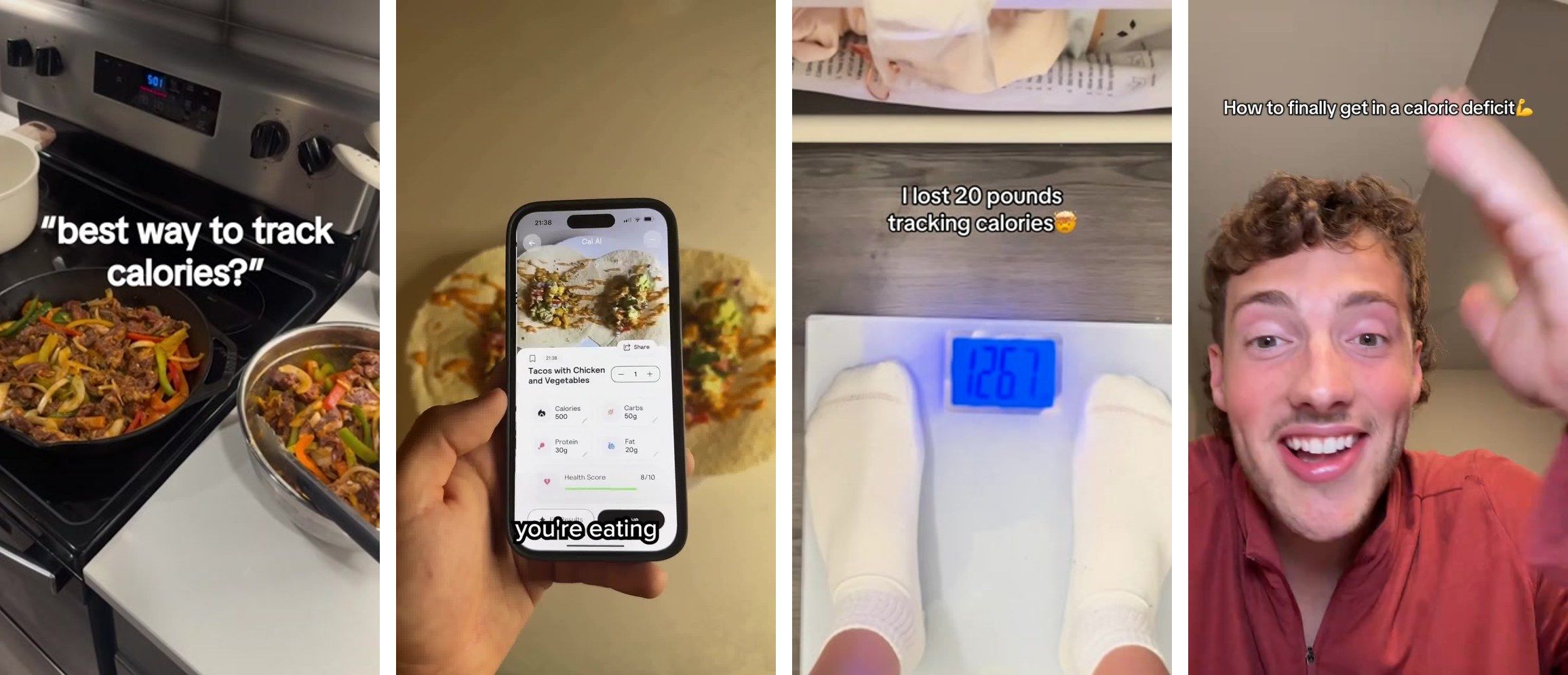
- He points his phone at his dinner
- an app called Cal AI told him how many calories were on the plate.
About 1,000 people downloaded the app over the next two days since the story, and roughly 100 users paid for it.
That was the first money Cal AI spent on marketing. Eleven months later the company said it had passed 5 million downloads, and in March 2026 MyFitnessPal announced it had bought the app, at which point the numbers being quoted were over 15 million downloads and more than $30 million a year in revenue.
Here is exactly what happened in between:
1. Your product should show value in under three seconds
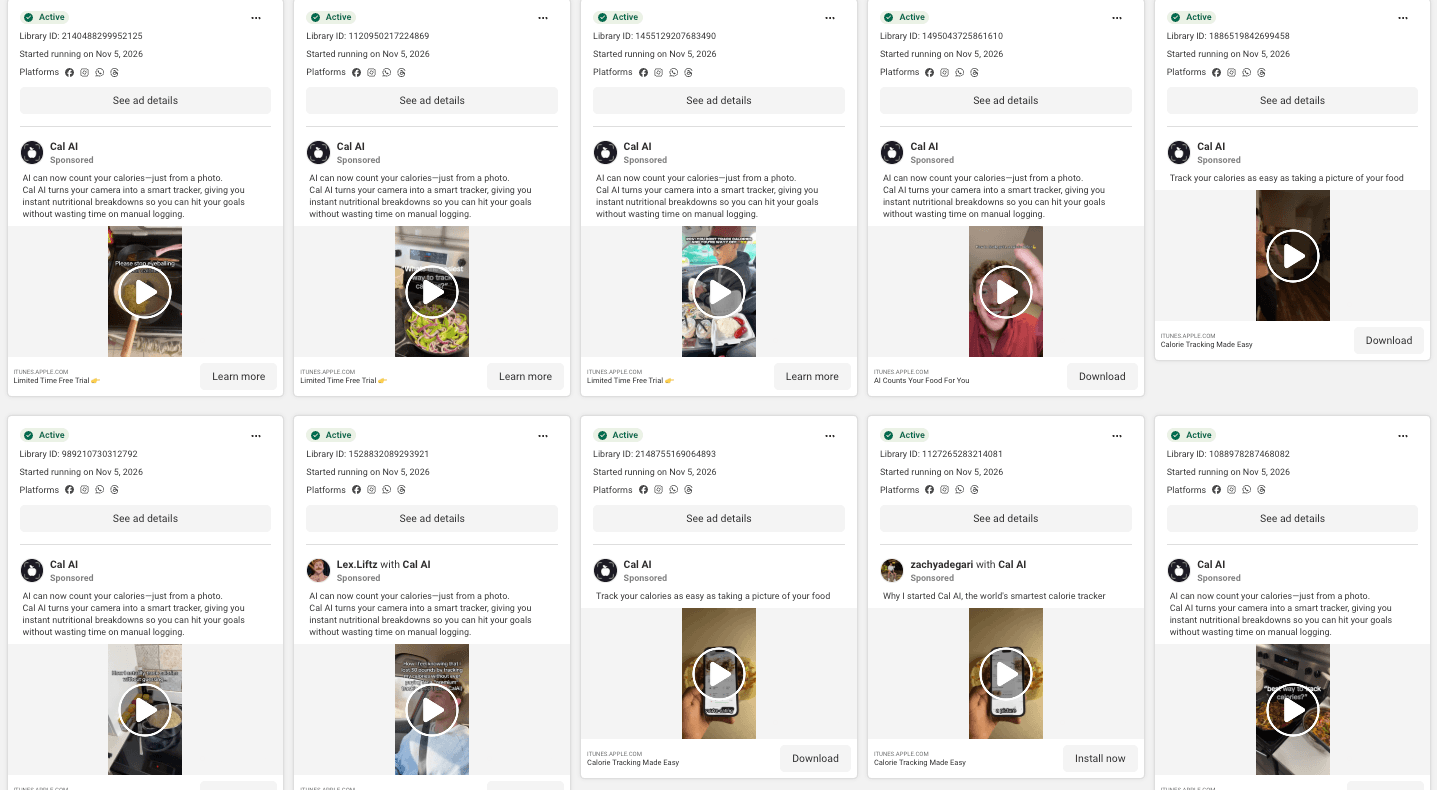
The entire pitch for Cal AI fits in one shot. You point the phone at a plate, the app scans, your calorie number appears. Jake Castillo, who ran the creator programme, calls this the magic moment, and creators were briefed to film those three steps and very little else. You can find this exact formula even two years later if you browse their ads on Meta.
An important detail was that each creator was given a special build of the app that showed the logo on every screen, so the redistribution of videos always points back at Cal AI.
2. Spending $2,000 per marketing experiment is enough
Many early founders struggle with budgeting their experiments, being unsure how many tries they should give it before calling an experiment failed and moving on. I think the learning here is that in the early days you don’t need to go for the influencers with the widest audience, it’s more important to find the most niche ones, so you can start with a small budget.
For Cal AI, they spent $2,000 on a "social media marketing test run", and there was no proper marketing plan behind it beyond seeing what one single creator could do in terms of reach.
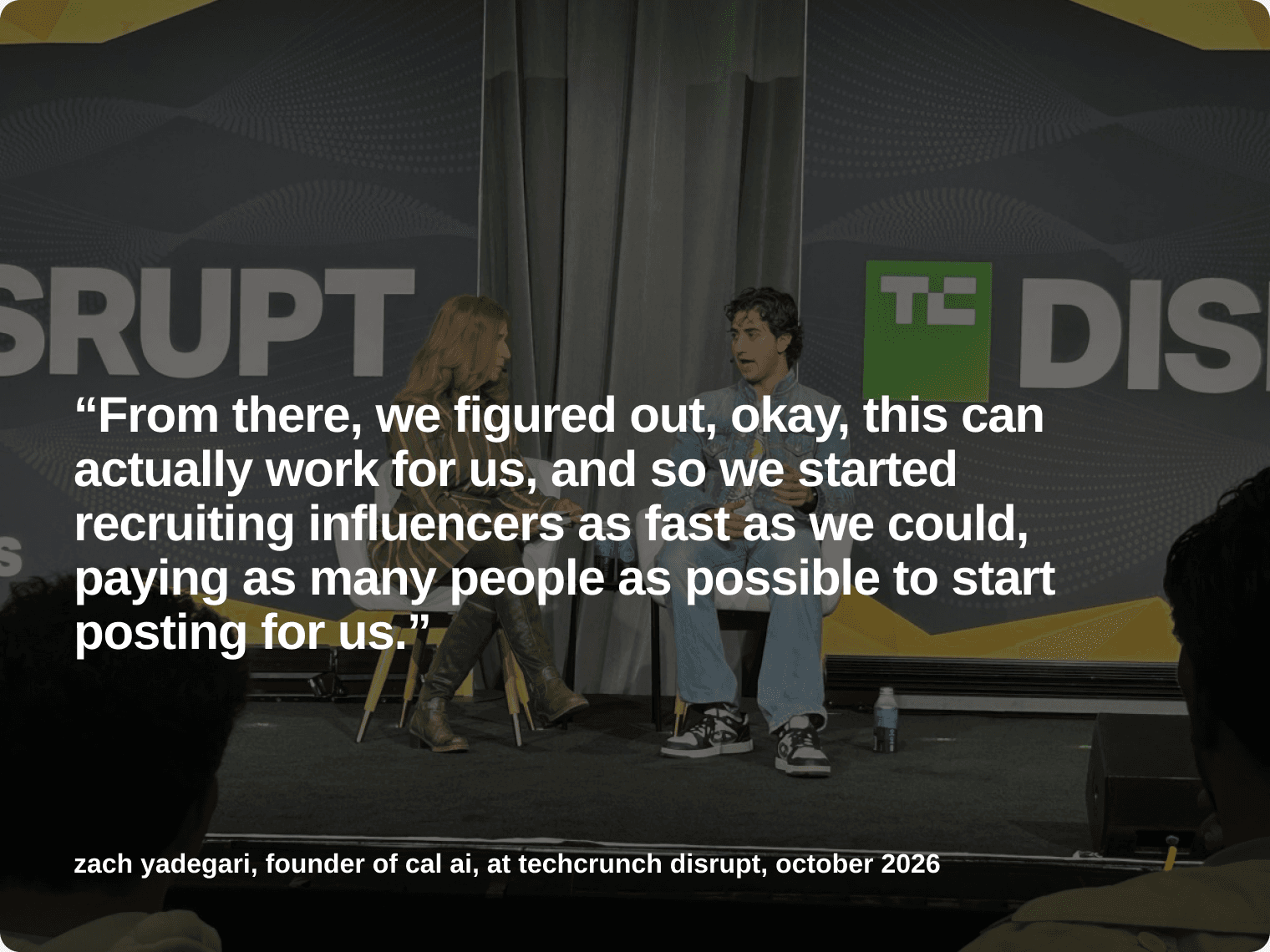
Photo: TechCrunch.
Yadegari describes what came next as "pretty linear, but it was extremely fast", in the sense that each new post brought a fairly predictable number of viewers who went on to download. By the company's account, revenue was about $28,000 in the first month, $115,000 in the second, and $1 million a month by the sixth.
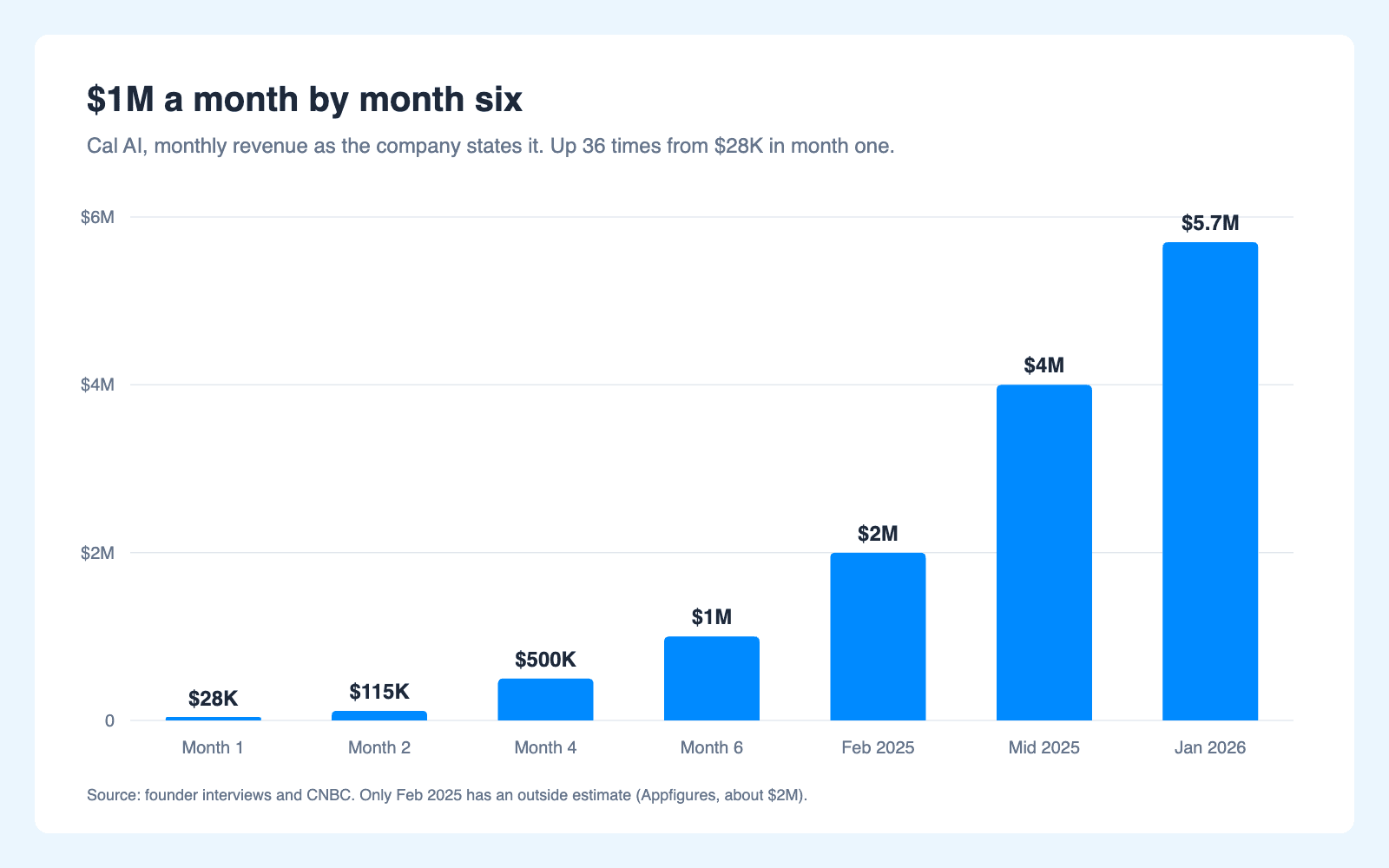
The founders paid for all of this themselves. Yadegari and his co-founder Blake Anderson covered the marketing bill for six months, until the app stores' payouts, which arrive some weeks after a sale, caught up with the spending.
3. Pick creators with a cult like niche
Yadegari did mention that the audience was way more important than the actual video. If you’re looking for micro influencers and creators, the best indicator here how "cult-like" their community seems. Check their impressions, how much their audience engages under posts and how they show their support. As a rough floor Cal AI was looking for creators with minimum 50,000 followers.
The other really interesting observation is that their website was more or less stale for over a year, it was a one pager that literally just pointed to the app. In this case you can tell that the founders were completely focussed on the one channel that worked and did not optimize their website much. When the website was finally rebuilt in the middle of 2025, the main thing on it was a wall of named fitness creators.
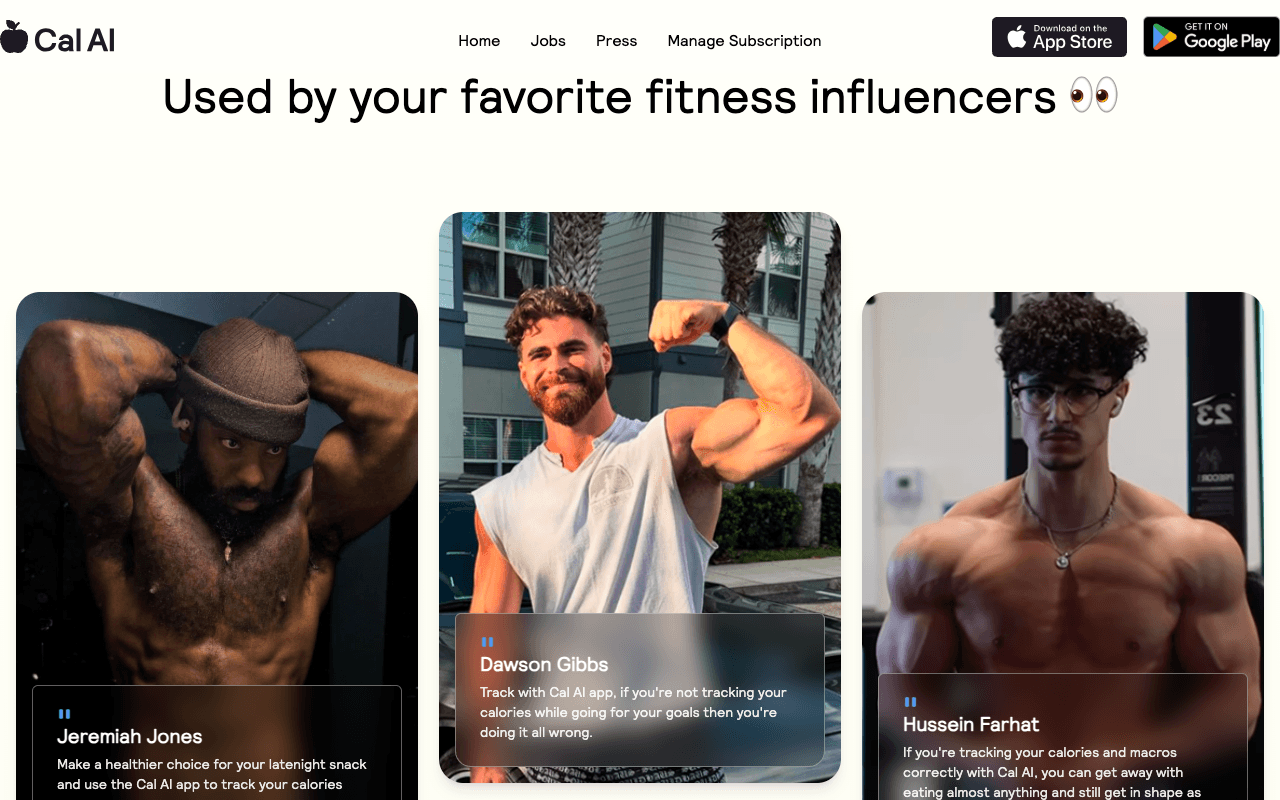
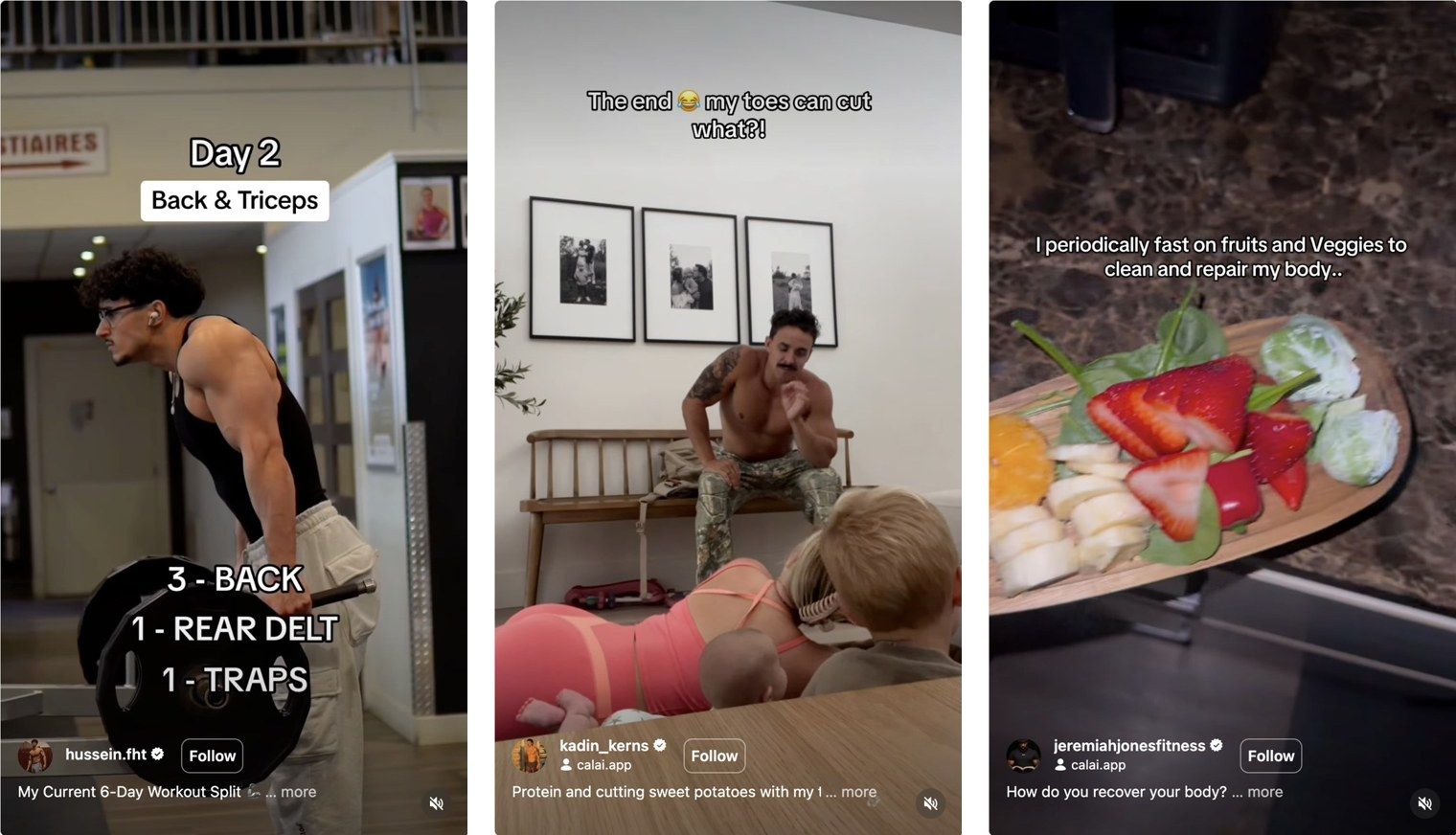
I also looked up the reels that Cal AI links to from its own homepage. Their creators don’t talk about the app, 90% of the content is about workout plans. Hussein Farhat's is titled "My Current 6-Day Workout Split" and has 52,500 likes. Kadin Kerns's is a joke about cutting sweet potatoes with his toes. There is another one from Jeremiah Jones who asks "How do you recover your body?"
These are big accounts by the way. Four of the five have more than a million followers, so eventually Cal AI did go for larger accounts. If you go through Cal AI's own Instagram account, it’s among the quieter one, its recent reels get between 18,000 and 177,000 views each.
4. Pay creators a fixed fee and set a rule on how many views it needs to generate
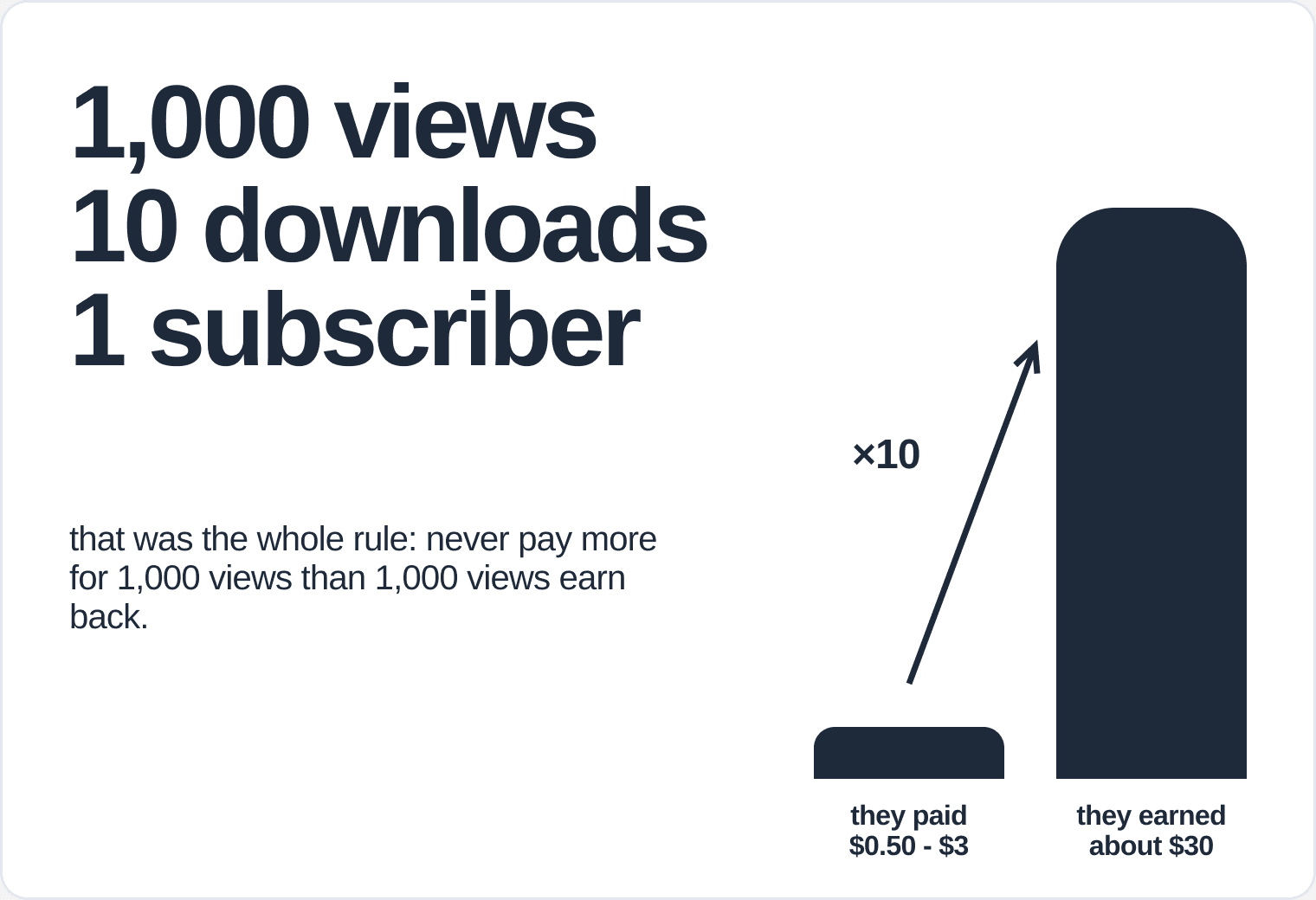
Throughout all things Cal AI did right, this is the part I'd learn from first. Creators were paid a flat fee, and in return they agreed to keep posting until their videos had reached an agreed number of views. I think this approach worked really well especially early on where the bet on smaller creators was usually seen as quite risky because of their smaller following and fluctuation in video quality. It gave smaller creators a stable, recurring earning and in return, Cal AI could be assured that there was a minimum amount of visitors coming their way. Given they had no investor money to burn, this is probably one of the most resourceful ways of working with the creator economy.
"We'll pay you this, but we need to get us at least this amount of use and keep posting until you get there."
Zach Yadegari, describing how a creator deal was put
The team worked out roughly how much money a thousand views brought in through new subscriptions, and they would not pay more than that for a thousand views. Here is a rough version of the sum, using figures from interviews that I'd treat as approximate.
Each creator also got a grade every month, which the team called a renewal score and which lived in a spreadsheet for a long time, and the grade decided who was hired again. By May 2025 there were 250 creators on a monthly fee, and Yadegari said the creator bill for the previous month was in the "mid 6 figures". A fixed fee has one more advantage, which is that when a video goes viral the extra downloads cost nothing.
The renewal score
A monthly grade for every creator, kept in a spreadsheet at first. With 50 to 70 creators posting on any given day, the team could not trace each download back to a video, so they judged a creator by the jump in downloads that followed their posts. A good grade meant another month. It also needed patience: one creator got 10,000 to 12,000 views a video for two months, then 7 million in the third.
5. Ask for payment in the first session
I’ve analyzed Cal AI’s onboarding journey, and new users answer a long quiz about their weight, their goal and their habits, and then they reach a payment screen. About 20 to 25 out of every 100 new users either pay or start a trial in that first session, and since the founders were funding the marketing themselves, that early money was what paid for the next group of creators.
One finding from his team surprised me. Their first quiz asked only what the app needed in order to estimate a calorie target. When they added more questions (ones that did not change the estimate at all), more people paid at the end.
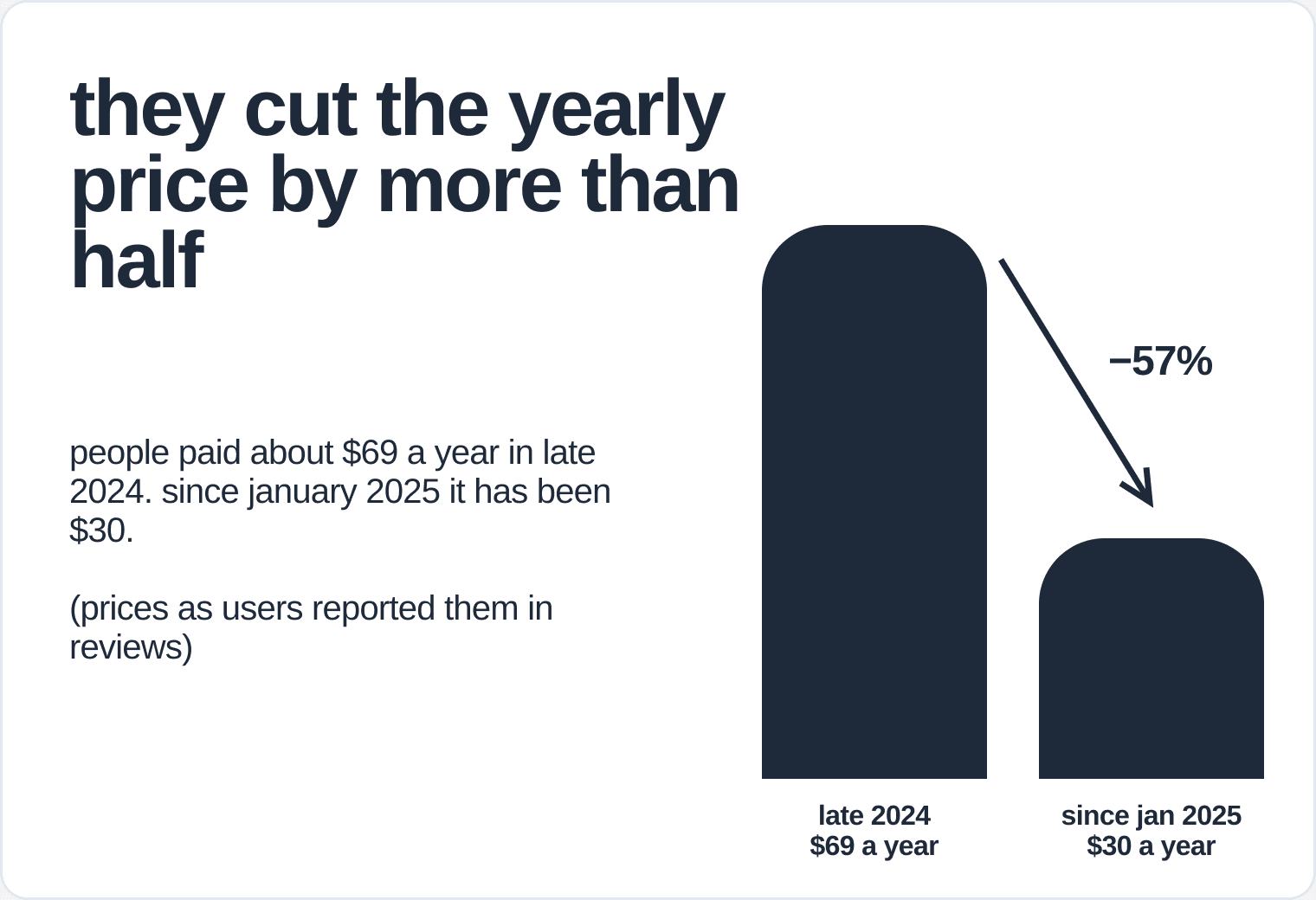
The payment screen itself was tested more or less continuously. Superwall, the company whose tool they used for it, counts 123 experiments across 160 designs. You can see the testing from the outside in the reviews, where people report the yearly price as about $69 in late 2024 and then $30 from January 2025 onwards. Spread over the 25 months they had been using the tool, that works out at roughly one new experiment every six days, and a new payment-screen design every five.
As of November 2026, there are 13 questions between tapping "Get Started" and the payment screen, and it took me a little under two minutes to get there. In this case, adding friction seems to result in a higher conversion number, which is also explained by the concept of “Positive Friction”. Similar to the foot in the door concept, someone who has already answered questions and made multiple small choices wants to act in line with that, and end up committing. Especially when the user itself was part of creating their plan by going through these questions, they tend to overvalue the things they helped to build (similar to the IKEA effect, when you go to IKEA and build something on your own).
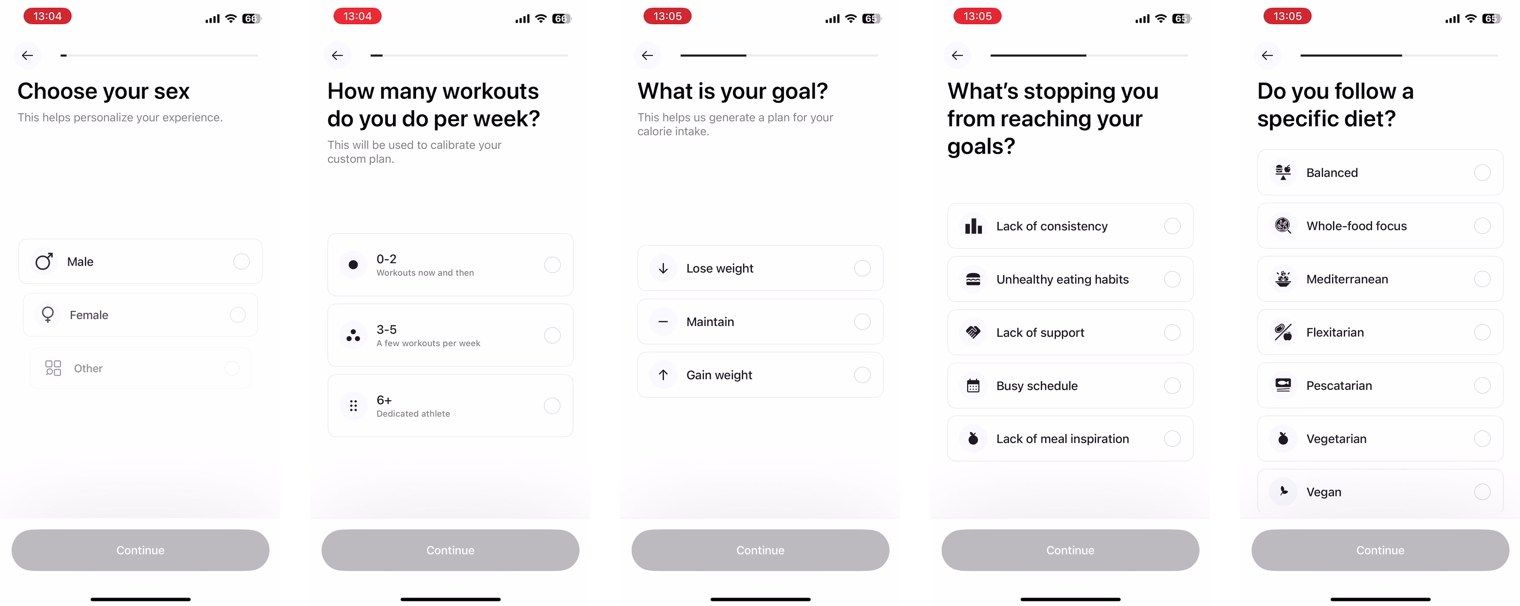
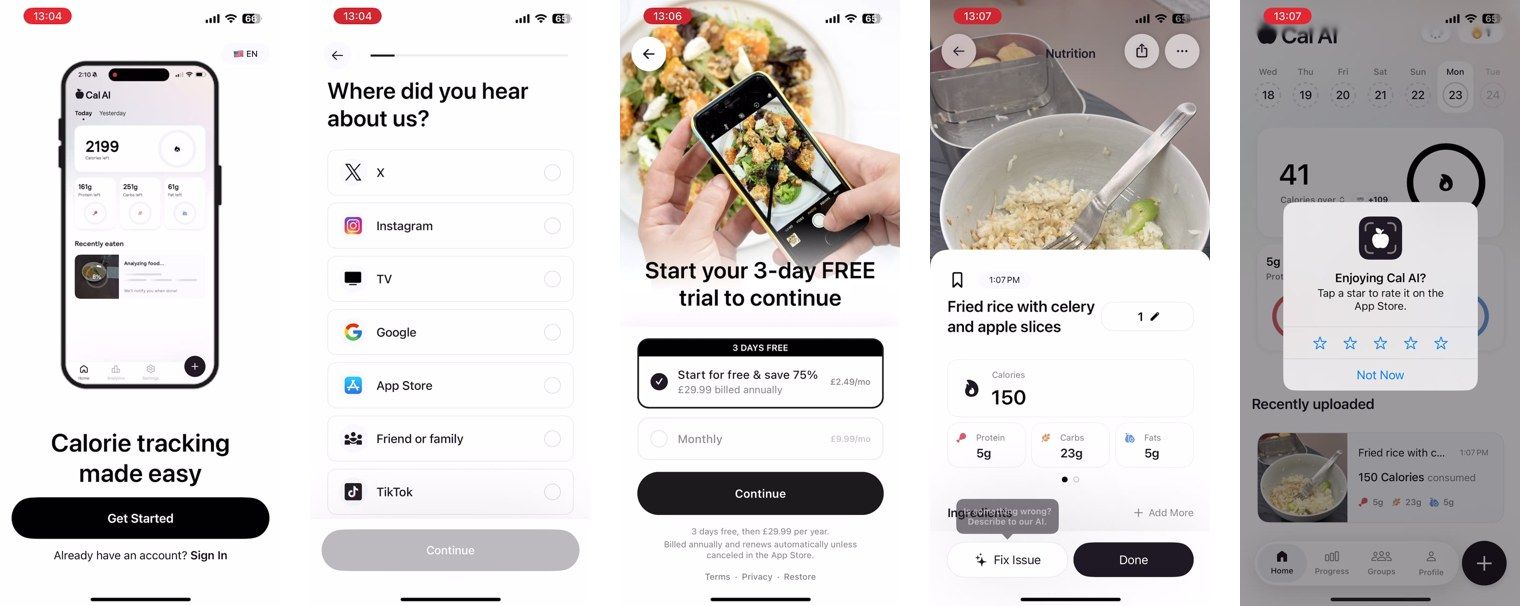
You can't scan anything until you have started the trial, so the first calorie number I saw (150, for a bowl of fried rice during my lunch) was after I paid. About twelve seconds after that first result, the app asked me to rate it on the App Store (which I deemed a bit early compared to other apps that wait until signs of stickiness are showing).
6. Finish the core product in a month and put the effort into distribution
If you take a close look at the 152 App Store updates, you’ll see that in the first three weeks after launch the app gained a way to correct a wrong scan, barcode scanning, a health score for each meal, meal sharing, and the option to type in what you ate.
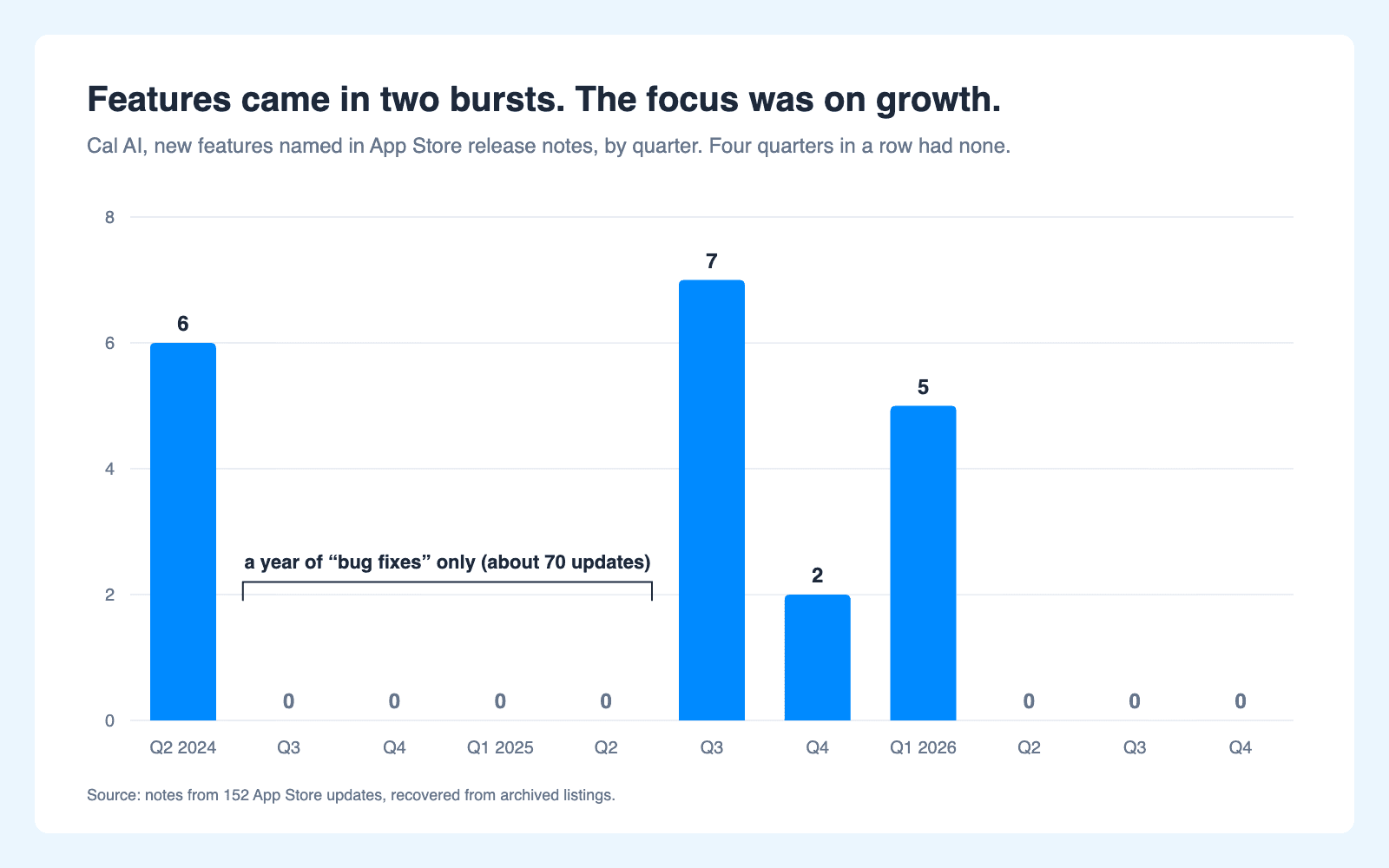
After that there is about a year, and roughly 70 updates, in which the notes say only "Improved accuracy and bug fixes". The few gamification features (streaks, badges, progress photos and groups you can join with friends) start arriving in September 2025.
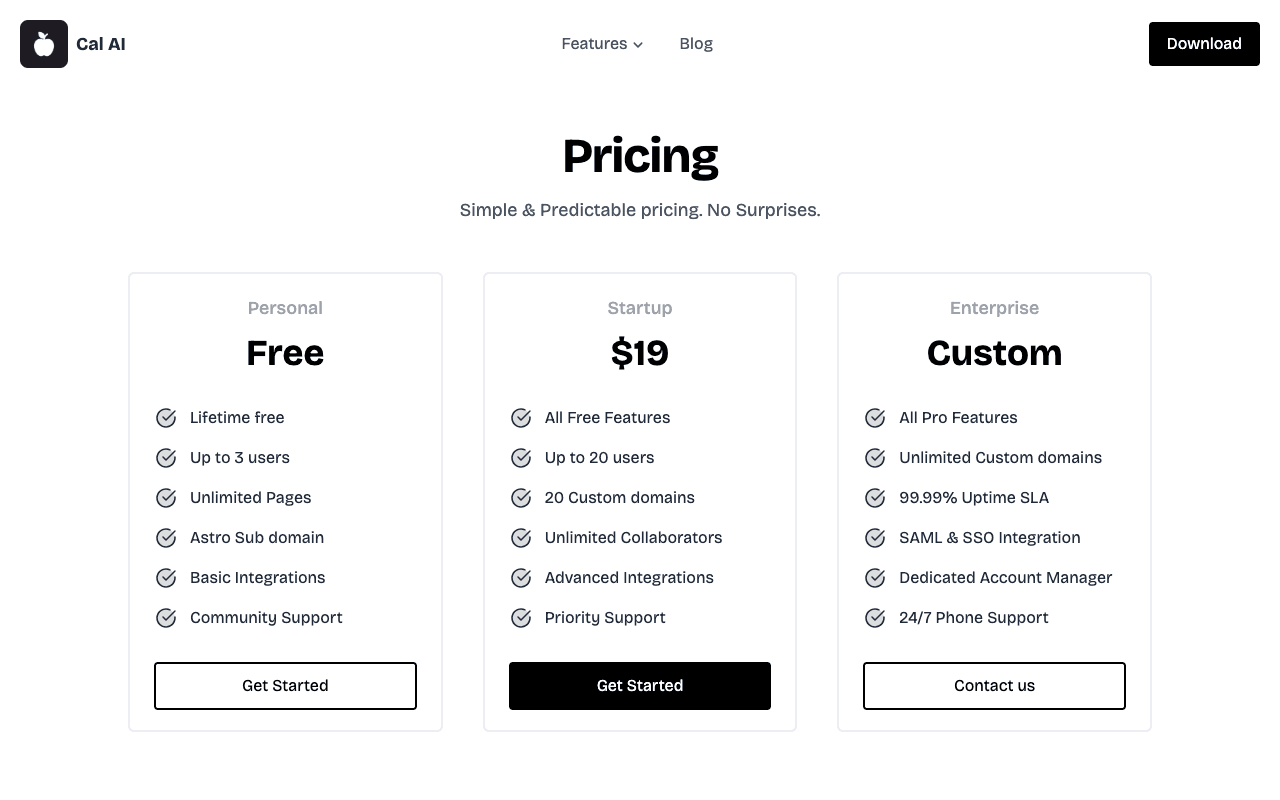
There is a smaller detail I can't stop thinking about. For about a year, the Cal AI website still had the pricing page that came with its OG template. It offered a "Startup" plan for $19 with "20 Custom domains", and an "Enterprise" plan with "SAML & SSO Integration", none of which has anything to do with counting calories. The page was still live in September 2025, a period in which the company says it was making several million dollars a month. This is quite interesting because most founding teams would scream at this, considering that usually a website is the face of a product. I take it as a sign of where the team's attention was.
7. Knowing when it’s time to add a second growth channel
Creator posts took Cal AI to about $2 million a month, according to Yadegari, and then growth slowed down, because at some point they have hired most of the creators who suit them.
The first thing they tried was to take the best creator posts and pay Meta to show them to more people. That only worked up to about $5,000 a day in spending. What worked was asking creators to make separate videos that were designed as ads, which Yadegari describes as more "salesy", and he says those took the company from $2 million to $4 million a month.
By September 2025, almost $770,000 a month going to advertising and marketing, against about $1.4 million in monthly gross profit. So more than half of what the company earned was going straight back into getting the app in front of people.
What I'd take from this if I were building a health app
Most of what Cal AI did is arithmetic, and I think any small team could try some of the frameworks:
- Show value in under 3 seconds
- Run one small paid test
- Test a fixed fee per creator
- Rank your creators
The harder part is the first item on the list. Cal AI had something that could be shown in three seconds, and a lot of health products don't or at least are not designed in that way yet. If your app is built on sleep, recovery or glucose data, the value usually shows up over weeks so a bit more creativity is needed to give users a hook they’ve earned once they sign up.