Embed genome testing in your health product
Offer genome testing in your app with a single API: With Terra API your users can order DNA test kits, track the order status and receive their results. We run the lab operations, the kits and the clinical compliance, so you can add genetics to your product without setting up a laboratory operation of your own.



Offer DNA testing without building a lab operation
One API call places the order. The kit ships to your user with a prepaid return label, an accredited laboratory sequences the sample, and a webhook tells you when the result is ready. You then fetch the result through the API, which hands your product a short-lived link to the structured object for that kit, ready to render. Everything between the order and that result, from the kit supply to the physician sign-off, happens on the Terra API side.
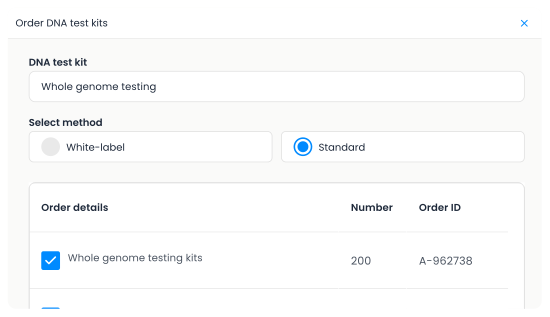
Place the order with one API call
Your app sends the recipient's details and the kit ships to their address, prepaid return label included. A DNA test is ordered through the same endpoint as every other test on the platform, so if you already run blood testing with Terra API, the ordering code you have already covers DNA.
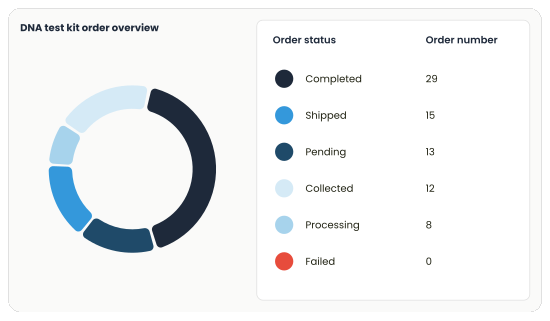
Follow every kit from shipping to sequencing
Your user swabs at home, activates the kit by scanning the QR code on the packaging and posts the sample back with the prepaid label. An accredited laboratory then sequences the whole genome at up to 30x coverage. Every stage, from shipped to collected to processing, is pushed to your webhook, and if a sample fails quality control the rejection arrives as an event so recollection starts without a support ticket.
Receive results as structured data
When the results-ready event reaches your webhook, you fetch the result through the API. The response carries a short-lived link to one structured object per kit: carrier status, disease risk, clinical findings and traits, each finding stating the method that produced it, with no lab PDF to parse. Your user confirms they have seen their results with an explicit action in your product, which is a compliance requirement of the platform and keeps the clinical responsibility with the laboratory and the physician network. Clinically significant findings arrive with an escalation level and a response deadline, so your team can route them to a clinician in time.
Carrier status, disease risk and clinical findings from one saliva sample
When the results-ready event fires, you fetch a short-lived link from the API and behind it is the report: one JSON object whose shape is the same whichever laboratory produced it, because every supplier is mapped onto the same structure before it reaches you. Each finding carries the category it belongs to, the method that produced it and its counseling flags, so your product can decide how to present a finding from those fields alone, without reading the laboratory's own PDF.
Carrier screening
Screens more than 2,000 recessive conditions a user could pass to a child, including cystic fibrosis, spinal muscular atrophy and fragile X. A carrier is usually healthy themselves, which is why these findings matter most to people planning a family. Each carrier finding is listed first in the result and carries a counseling flag, so you know when to offer a genetic counselor before showing the detail.
Disease risk
Polygenic risk scores for common conditions such as breast cancer, osteoarthritis and ADHD. A polygenic score adds up the small effects of many positions across the genome, so it describes where a user sits relative to the population as screening-level information. Findings in sensitive areas such as mental health arrive flagged, so you can keep them behind an explicit opt-in.
Clinical findings and traits
Single-gene variants with a clinical effect of their own, analysed alongside the polygenic scoring, plus the heritable traits written in the genome. Every finding states the method that produced it, whether a sequence variant, a copy number change, a repeat expansion or a polygenic score, so you can tell a directly observed variant from a statistical score when you present it.
Add genetic findings to wearable and blood data
Sequence a user once and use the genome for years: With Terra API your users take one DNA test, and every feature you ship afterwards can read the same result, from medication guidance to personalised coaching. The lab keeps the sample and re-analyses it as the science moves on, and each new version of the report arrives on the same webhook, so your users get updated results without ordering a new kit.
Carrier status
Whether a user carries one of more than 2,000 recessive conditions they could pass to a child, from cystic fibrosis to spinal muscular atrophy and fragile X. Each carrier finding comes with a counseling flag.
Read the docs
Single-gene findings
Variants in a single gene with a clinical effect of their own, each flagged for counseling.
Read the docs
Cancer risk
Polygenic risk for cancers such as breast cancer, read across many positions in the genome and reported as screening-level risk.
Read the docs
Common condition risk
Polygenic risk for everyday conditions such as osteoarthritis and ADHD. Sensitive areas such as mental health arrive flagged, so your product can hold them behind an opt-in.
Read the docs
Heritable traits
The traits written in a user's genome, reported in the same structured shape as every clinical category so you can show them side by side.
Read the docs
Medication response
Pharmacogenomics: how a user is likely to metabolise common medications, read from star alleles. Coming as a report bundle.
Read the docs
Longevity
Genetic markers tied to healthy ageing and lifespan, reported as context for prevention and longevity programmes. Coming as a report bundle.
Read the docs
Ancestry
Where a user's genome comes from, as population and regional ancestry. Coming as a report bundle.
Read the docs
Epigenetics
Biological age and methylation markers from the same saliva sample, delivered with interpretation. In beta. Which bundles an order returns depends on the variant you sell.
Read the docs
Carrier status
Whether a user carries one of more than 2,000 recessive conditions they could pass to a child, from cystic fibrosis to spinal muscular atrophy and fragile X. Each carrier finding comes with a counseling flag.
Read the docsSingle-gene findings
Variants in a single gene with a clinical effect of their own, each flagged for counseling.
Read the docsCancer risk
Polygenic risk for cancers such as breast cancer, read across many positions in the genome and reported as screening-level risk.
Read the docsCommon condition risk
Polygenic risk for everyday conditions such as osteoarthritis and ADHD. Sensitive areas such as mental health arrive flagged, so your product can hold them behind an opt-in.
Read the docsHeritable traits
The traits written in a user's genome, reported in the same structured shape as every clinical category so you can show them side by side.
Read the docsMedication response
Pharmacogenomics: how a user is likely to metabolise common medications, read from star alleles. Coming as a report bundle.
Read the docsLongevity
Genetic markers tied to healthy ageing and lifespan, reported as context for prevention and longevity programmes. Coming as a report bundle.
Read the docsAncestry
Where a user's genome comes from, as population and regional ancestry. Coming as a report bundle.
Read the docsEpigenetics
Biological age and methylation markers from the same saliva sample, delivered with interpretation. In beta. Which bundles an order returns depends on the variant you sell.
Read the docsWhat comes back from a single swab
Whole genome sequencing at up to 30x coverage, over 99.9% accurate, run in CLIA-certified, CAP-accredited laboratories. Every finding returns in one supplier-neutral structure with its method and its counseling flags attached.
- Cystic fibrosis carrier status
- Breast cancer risk
- Sequence variants
- Spinal muscular atrophy
- Osteoarthritis risk
- Copy number analysis
- Fragile X
- ADHD risk
- Repeat expansions
- 2,000+ carrier conditions
- and more…