We use cookies to enhance your browsing experience and analyse our traffic. By clicking “Accept All”, you consent to our use of cookies according to our Cookie Policy. You can change your mind any time by visiting out cookie policy.
During the April 2026 Tube strikes, Londoners adapted by cycling more—activity tripled, e-bike commutes rose 13%, and 19% of cyclists were entirely new to riding. Data analysis of 1,566 weekday rides revealed e-bike share jumped from 54.9% to 67.5%, with commutes often staying local. The strikes disrupted transit but highlighted Londoners' resilience in finding alternative ways to move.
Londoners swapped tubes for tires — April 2026 TFL strikes tripled cycling activity compared to previous weeks' commuting averages. When the trains stopped, the pedals started.
The strike minted brand-new cyclists — 19% of riders during the strike hadn't logged a single session in the previous 6 weeks. A transport crisis pulled fresh users onto bikes almost overnight.
E-bikes quietly stole the show — commuter e-bike rides jumped 13% during the strike period. When distance and speed matter more than usual, the motor wins.
“London faces significant disruption on all lines as TfL strikes this April 21 to 24.”
Every Londoner knows the feeling, jam-packed trains, delays or simply no trains. Everyone re-plans how they are going to get across the city and there is one mode of transport that saves the day every time: cycling.
To see what actually changed during the April 2026 strike period, we looked at cycling activity across the strike days and compared it with the previous three weeks. The takeaway: cycling increased and e-bikes take a noticeably bigger share of the load.
More people cycled during the strike
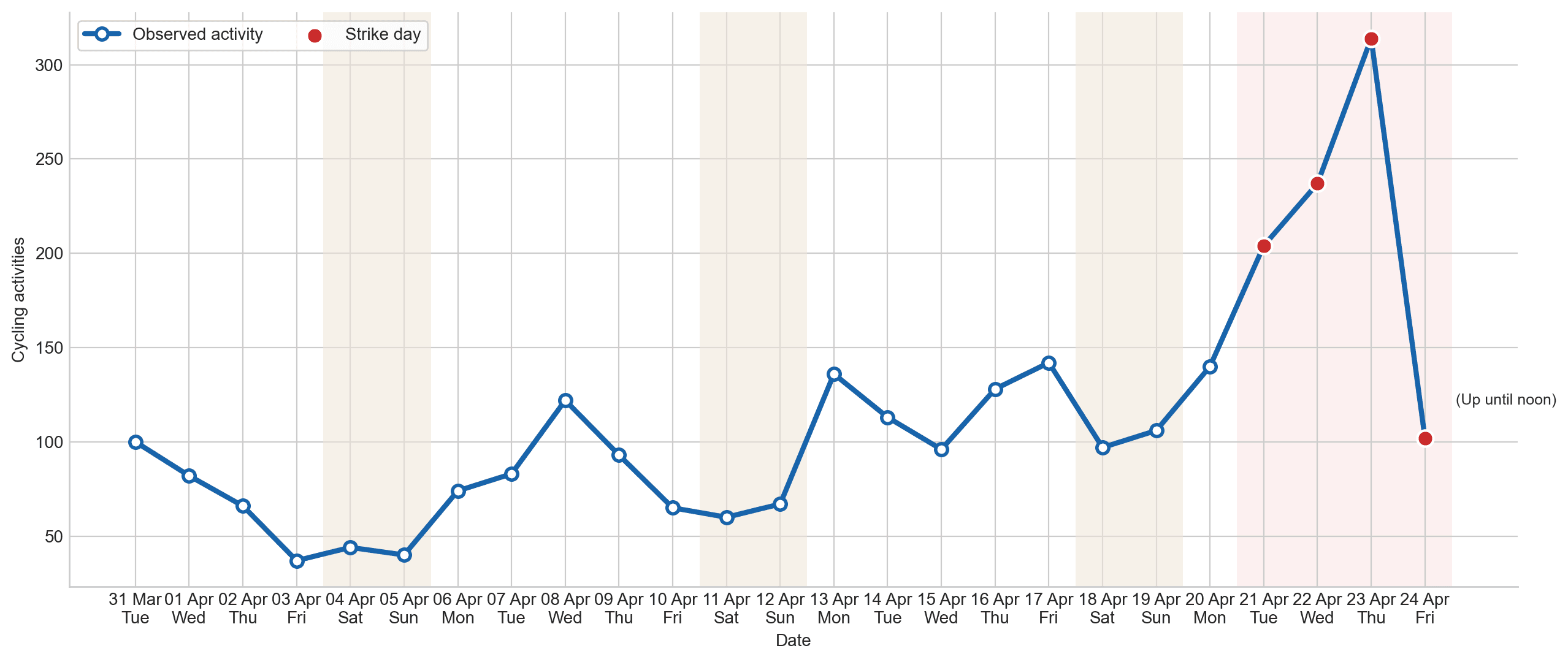
Cycling activities roughly tripled during the April strike compared to the previous three weeks. The drop in activities this Friday is likely a combination of the strikes is coming to an end and the data being analyzed up until noon.
Figure 1: Cycling activities throughout the weeks leading up to the strikes. Weekends shaded out and strikes labelled in red.
Users who appeared during the strike had been much less active beforehand, about 18.9% of strike users had not recorded any rides in the previous 6 weeks at all.
Get the latest Terra Research reports and insights every week as soon as they're published.
Whether you are team Lime or team Forest, one thing is the same: if it’s a standard UK e-bike, it should stop assisting at around 25 km/h.
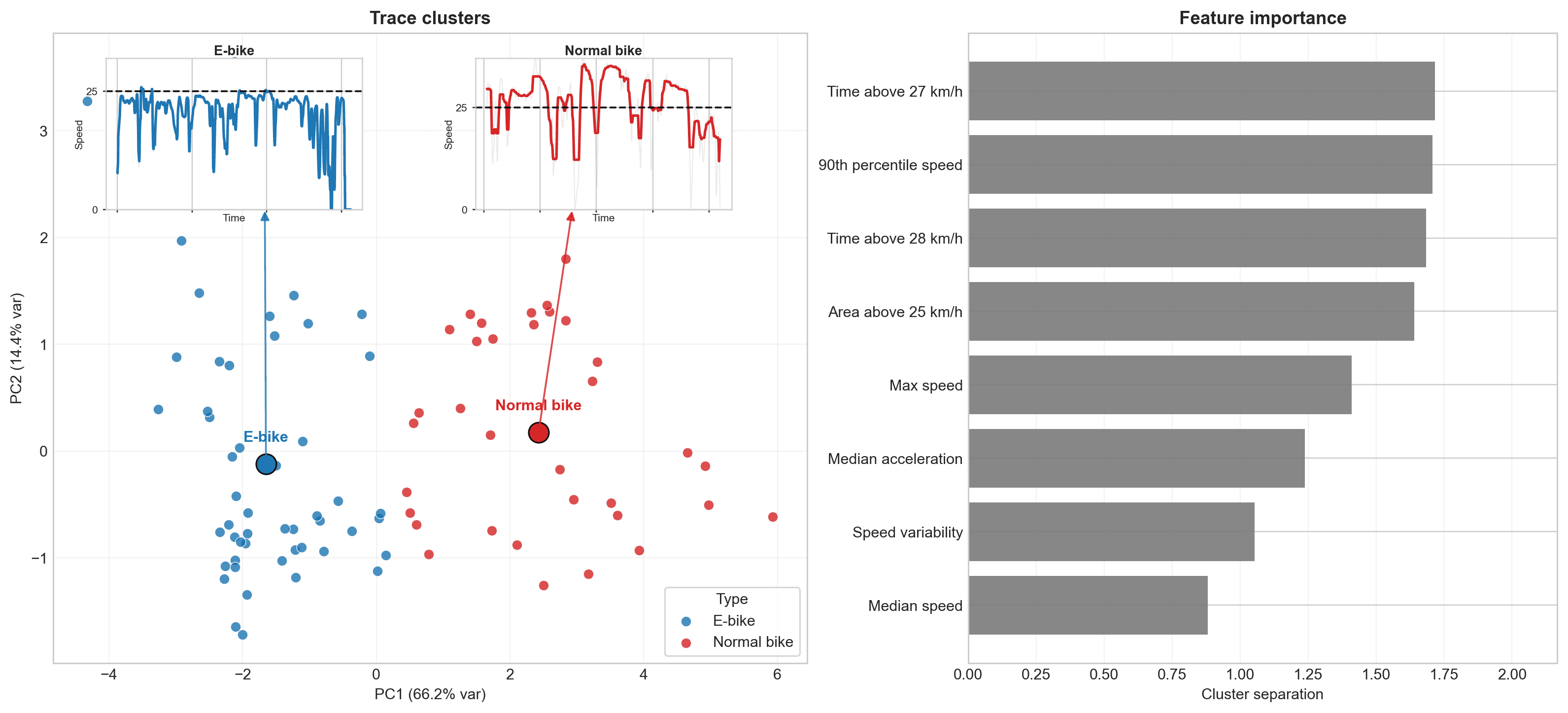
To separate likely e-bike rides from normal bike rides, we used unsupervised k-means clustering with k = 2 on sampled weekday commute speed traces. Each ride was represented using cap-sensitive features: median speed, 90th percentile speed, speed variability, maximum speed, time spent above 27 km/h, time spent above 28 km/h, the integrated area above the 25 km/h cap, and median absolute acceleration. All features were z-score standardised before clustering. The feature set was chosen to maximise separation in PCA space while keeping the split interpretable. The cluster with lower upper-tail speeds and much less time above the cap was labelled E-bike, and the other cluster was labelled Normal bike.
The biggest discriminatory feature was not average speed but what happens in the upper tail of speed distributions. That is exactly what you would expect if one group is being constrained by a speed limit and the other is not.
Figure 2: Left: the two ride clusters in PCA space. The traces show a typical e-bike-like ride and a typical normal-bike-like ride. Right: the features that most strongly separate them.
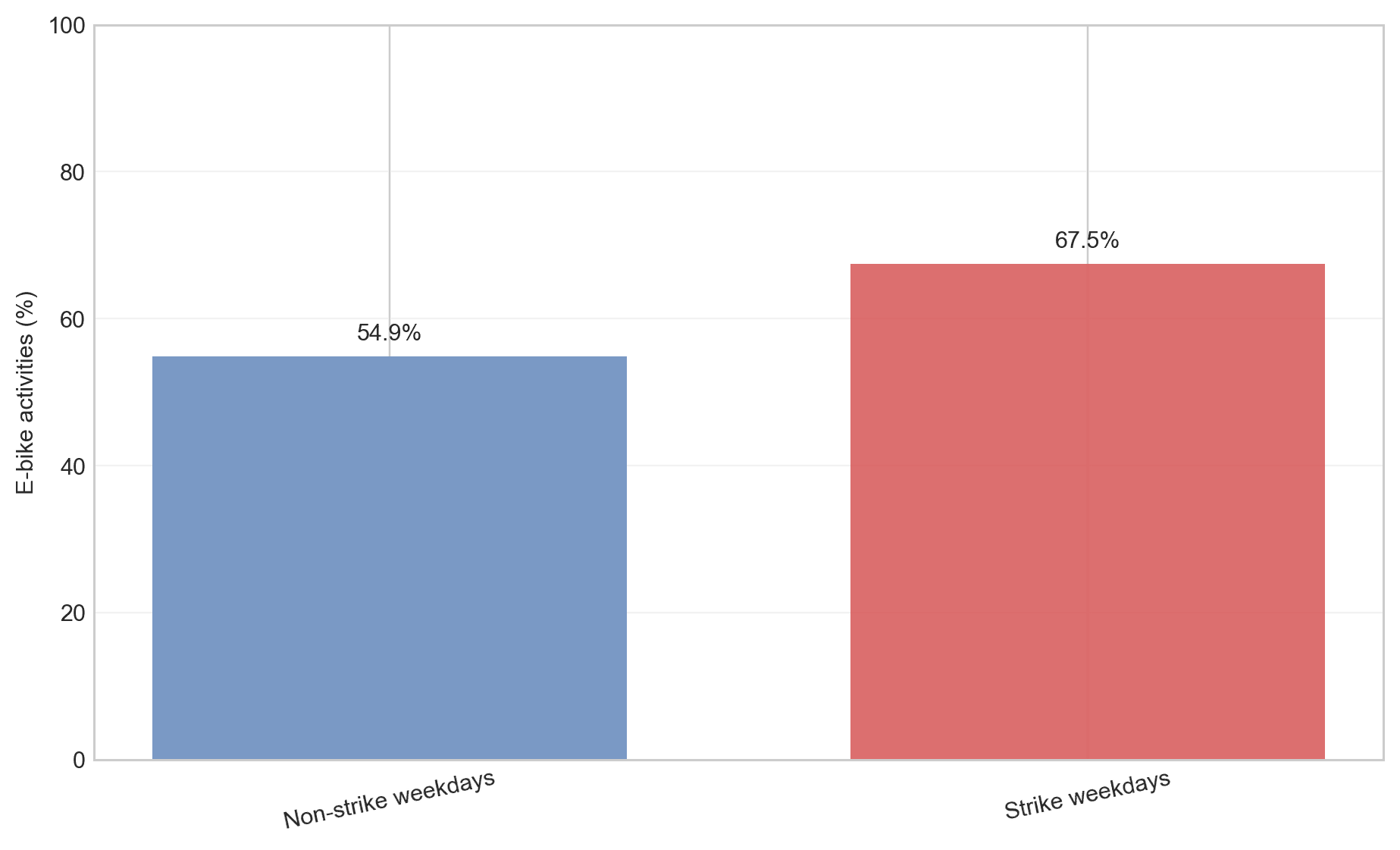
Once those activities were labelled, the strike effect was pretty clear. In the sampled rides:
on non-strike weekdays, 54.9% activities were classified as e-bike
on strike weekdays, 67.5% activities were classified as e-bike
median speed on strike days drops from 23.11 km/h to 21.44 km/h
Figure 3: Estimated share of e-bike rides in sampled weekday activities. During the strike days, the e-bike share rises from 54.9% to 67.5%.
Where do people commute to and from?
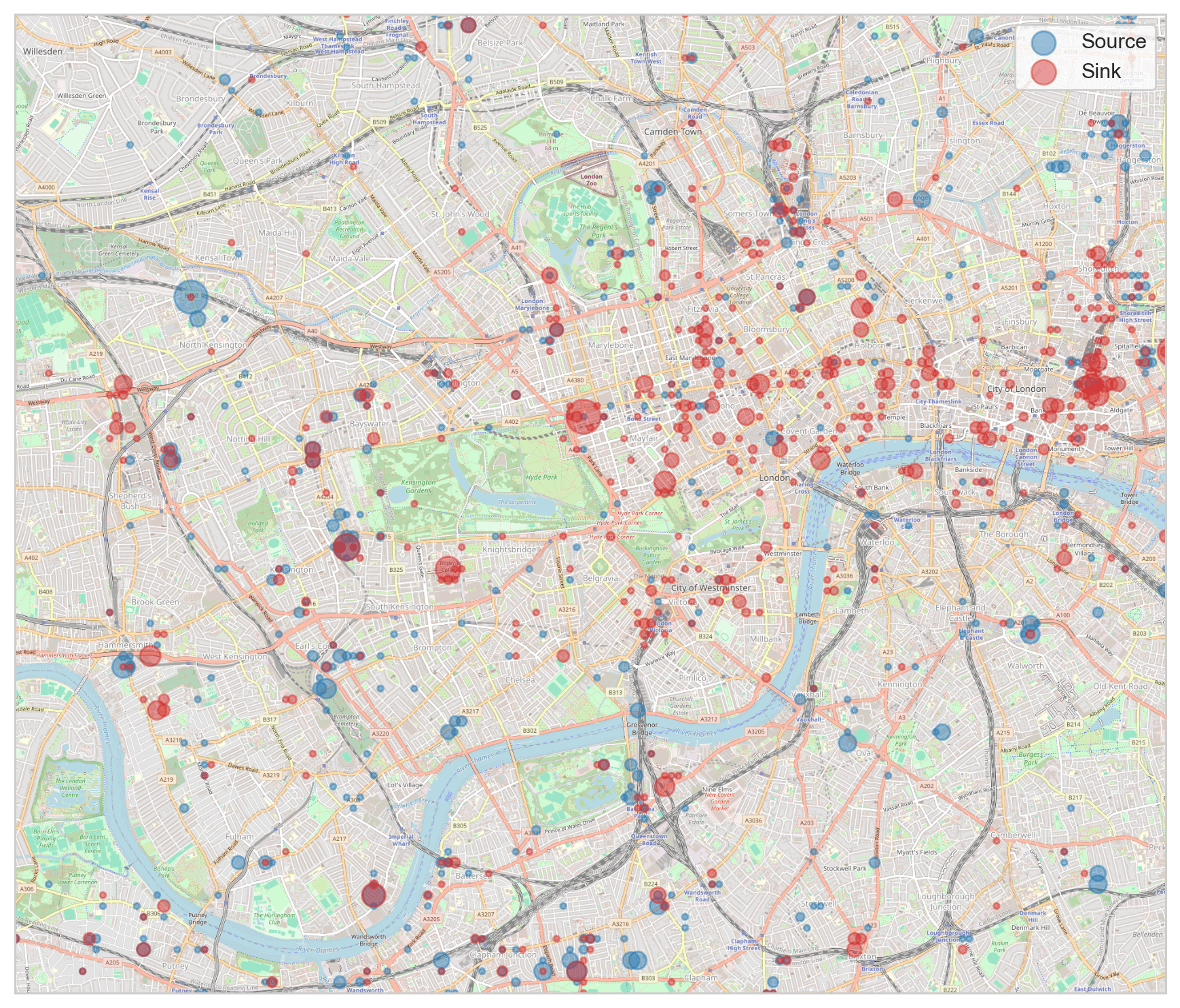
The spatial picture is just as interesting. The weekday map includes 1,566 cycling activities from 289 users. Blue circles show likely trip sources (where people go from), and red circles show likely sinks (where people go to). Can you find your local e-bike dock inside a blue circle and your office inside a red circle?
Figure 4: Rounded weekday source and sink locations during the April 2026 strike period. Blue marks likely trip origins; red marks likely destinations.
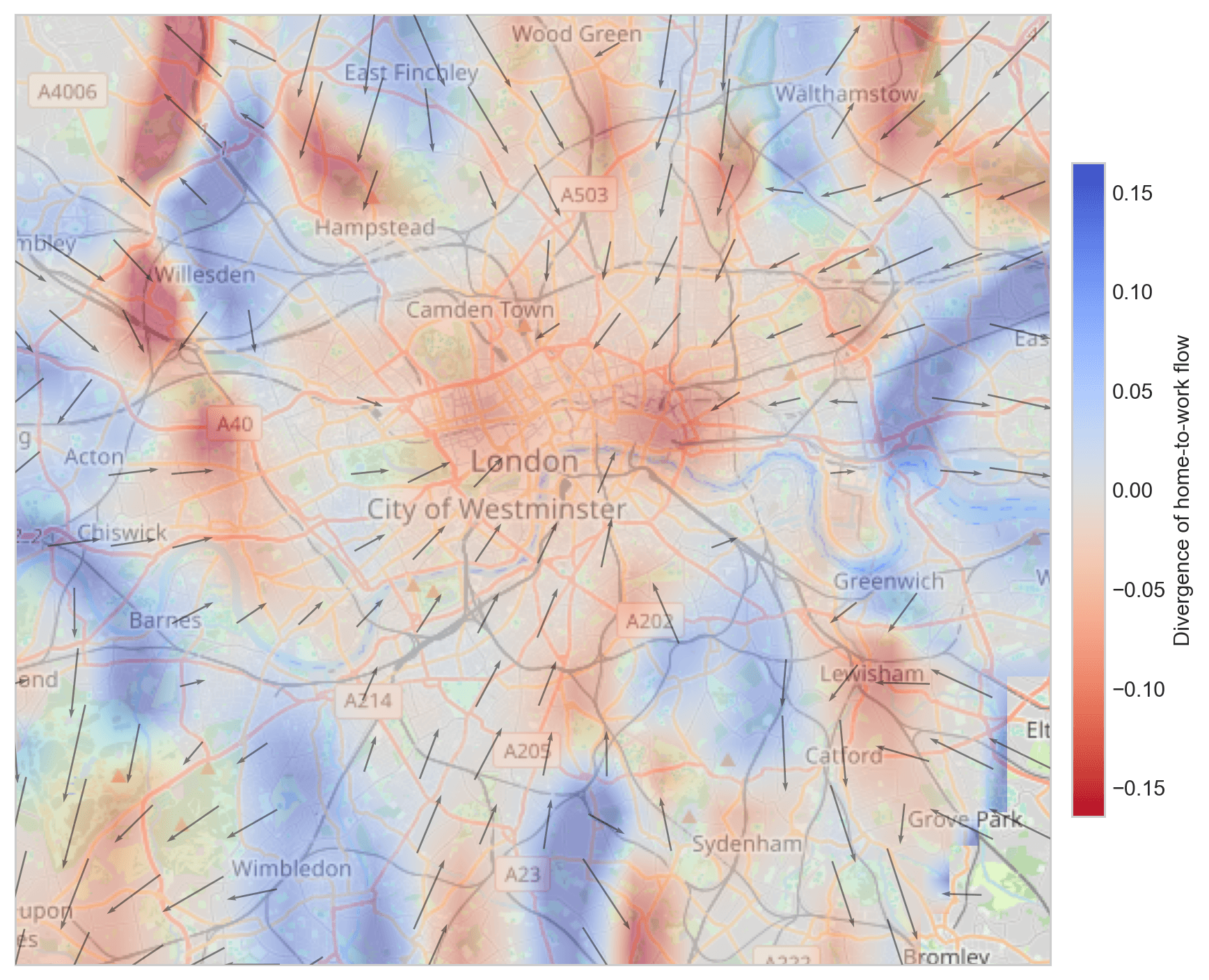
Another interesting finding, people tend to live close to work and commutes are often quite local. While Central London still acts as a major sink, many patterns also show short-to-medium commutes between nearby residential and work areas. For example, people living around Wimbledon tend to commute further south-west.
Figure 5: Smoothed weekday commute field during the strike period. Blue regions act more like trip sources; red regions act more like trip sinks.
What this says about London
None of this is especially surprising after experiencing the strike first hand. When the Tube becomes unreliable, London does not stop moving and people cycle more, often relying on e-bikes. TfL strikes may disrupt the network but they also reveal something else about the city: Londoners are very good at finding another way home.
Summary questions
Did Londoners actually cycle more during the April 2026 Tube strike?
Yes, dramatically. Cycling activities roughly tripled during the strike days compared to the previous three weeks of baseline data. The Friday dip in the data reflects both the strike winding down and the analysis cutting off at noon — the underlying trend is a clear, sharp surge in cycling whenever the Tube goes down.
Were these strike-day cyclists regular riders or new ones?
Many were essentially new. About 18.9% of users who recorded rides during the strike had not logged a single ride in the previous six weeks. The strike didn't just shift existing cyclists onto busier routes — it pulled a meaningful share of dormant or first-time riders onto bikes.
Did e-bikes take over during the strike?
They took a noticeably bigger share of the load. On non-strike weekdays, 54.9% of sampled rides were classified as e-bike trips; on strike weekdays that jumped to 67.5%. When the Tube fails, Londoners disproportionately reach for Lime, Forest, and other e-bike options rather than standard pedal bikes.
How can you tell an e-bike ride from a normal bike ride using wearable data?
The giveaway isn't average speed — it's the upper tail. Using k-means clustering (k=2) on features like 90th percentile speed, time above 27 and 28 km/h, and the integrated area above the UK 25 km/h assist cap, e-bike rides cluster tightly under the cap while normal bikes show a much longer upper-speed tail. That capped-tail signature is exactly what a regulated motor assist looks like in the data.
Why did median cycling speed drop during the strike?
Median speed fell from 23.11 km/h on normal weekdays to 21.44 km/h during strike days. That drop is consistent with more casual and first-time riders entering the pool, plus heavier traffic and busier cycle lanes. More people cycling doesn't mean faster cycling — it means a slower, denser, more mixed-ability flow across the city.
How far do Londoners actually commute by bike?
Often not very far. The weekday strike map covered 1,566 activities from 289 users, and while Central London remained a major destination sink, many trips were short-to-medium commutes between nearby residential and work clusters. Riders around Wimbledon, for example, tended to commute further south-west rather than into the centre — local commuting is a bigger part of the picture than the Zone 1 narrative suggests.
Can wearable data really capture how a city responds to disruption?
Yes, and at high resolution. By comparing strike-week cycling activity against three weeks of baseline, classifying rides as e-bike vs. normal using speed-trace clustering, and mapping source-sink patterns from 289 users, you can quantify behavioural shifts within days of an event. No surveys, no transport authority data — just GPS and speed traces from consumer wearables.
What does this say about London's resilience to transport disruption?
Londoners adapt fast. A tripling of cycling activity, a 12.6 percentage-point jump in e-bike share, and nearly one in five riders being people who hadn't cycled in six weeks all point to the same thing: when the Tube breaks, the city reroutes itself onto bikes — especially e-bikes — almost overnight. Strikes disrupt the network, but they don't stop the city moving.