Blog
Flo is getting into wearables
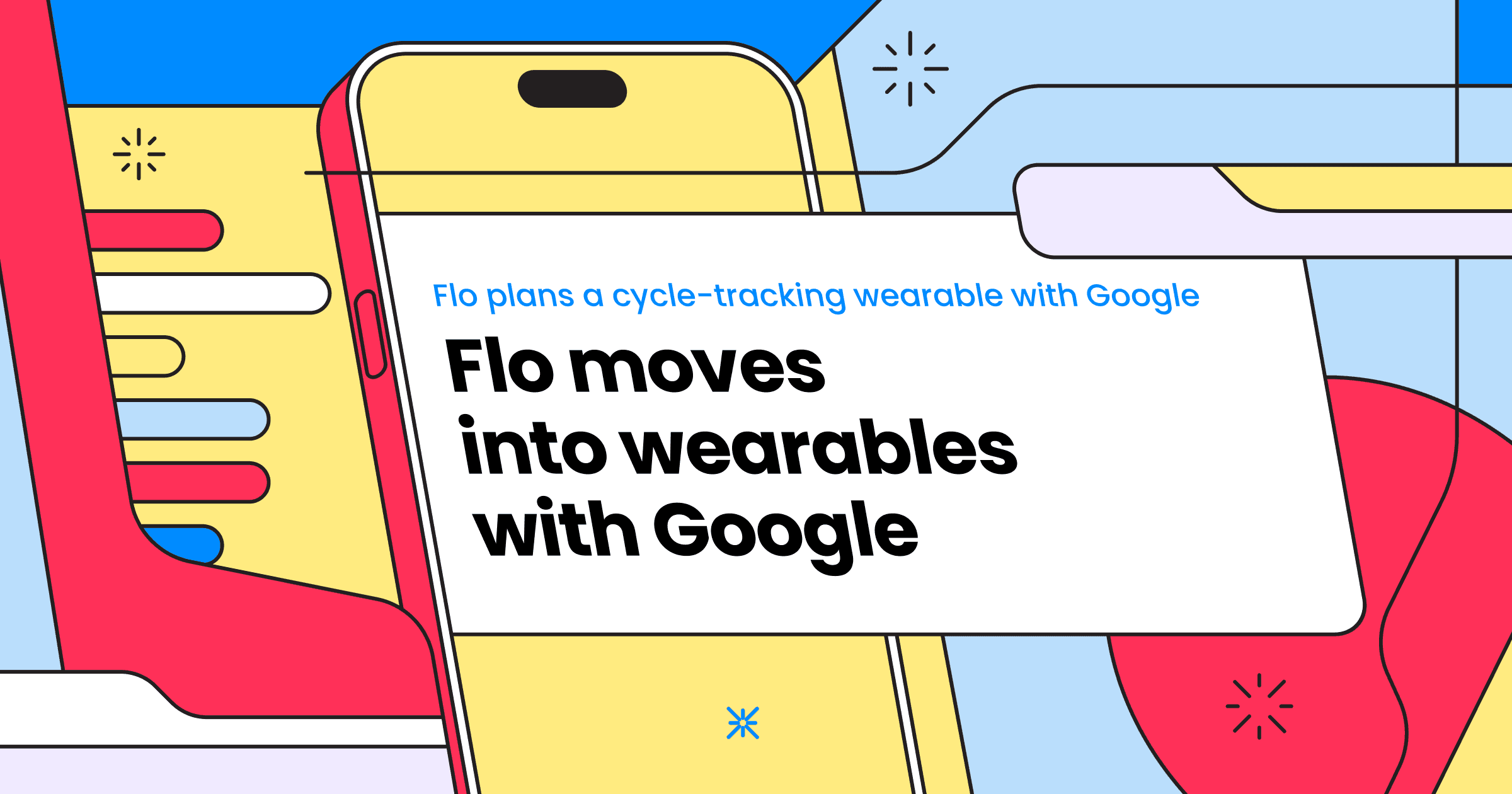
Flo is getting into wearables with Google. Its own hardware could give it more control over how it collects the data used for cycle tracking.
TL;DR: Flo and Google plan a wearable built around cycle tracking, with Fitbit data flowing into Flo from early 2027. A device is a far bigger commitment than an app integration, and anyone already wearing a watch or ring will ask why Flo cannot use that. Overnight skin temperature is the measurement that gives Flo a reason to shape the hardware.
Flo says more than 80 million people use its app every month. Now it wants to build wearables with Google. People already use Flo to understand their cycles; a device could collect some of the information for them while they sleep.
The companies plan to combine Flo’s women’s health algorithms with Google’s hardware and sensors. They haven’t shown a device, set a price or announced when it will arrive. There is also an app integration planned for early 2027, which will bring Fitbit measurements into Flo.
A device is a bigger commitment than an integration
Making a device is a much bigger commitment than adding that connection. Flo would be getting involved in something people have to charge, clean, sleep in and eventually replace. Google brings experience with those problems. Flo brings people who might actually want the result, along with a product they already use.
Someone who is happy to check their period dates on a phone hasn’t necessarily been waiting to buy something else. And anyone already wearing a watch or ring has a reasonable objection: why can’t Flo use that?
Why not the watch or ring people already wear
In some cases, it can. Flo already works with Oura temperature trends, and the planned Google Health connection adds another route. Its own hardware needs to improve the experience enough to justify the purchase. I’d be interested in a cheaper device built around cycle tracking.
Temperature is the reason to shape the hardware
Temperature is one measurement that gives Flo a reason to get involved in the design. Skin temperature often rises after ovulation and falls around menstruation. Repeated overnight readings can help reveal that pattern across a cycle. Alongside recorded period dates, they could give Flo more information to work with when estimating the next period. Whether a future device actually improves those estimates will need to be tested.
When we invited Flo CTO Roman Bugaev and Vladislav Nedosekin to speak at our HQ, Roman explained to Kyriakos Eleftheriou how Flo had spent years improving its cycle-prediction algorithm, adding wearable temperature to the data it used. His team had already trained algorithms on wrist skin temperature and was also using readings from fingers.
Flo could bring that experience into the design of a device with Google. Roman pointed to watches being charged overnight, when Flo wants temperature readings. Working on the hardware together gives the companies a chance to address that problem, with Flo involved in how the measurements are collected as well as how they are used.