We use cookies to enhance your browsing experience and analyse our traffic. By clicking “Accept All”, you consent to our use of cookies according to our Cookie Policy. You can change your mind any time by visiting out cookie policy.
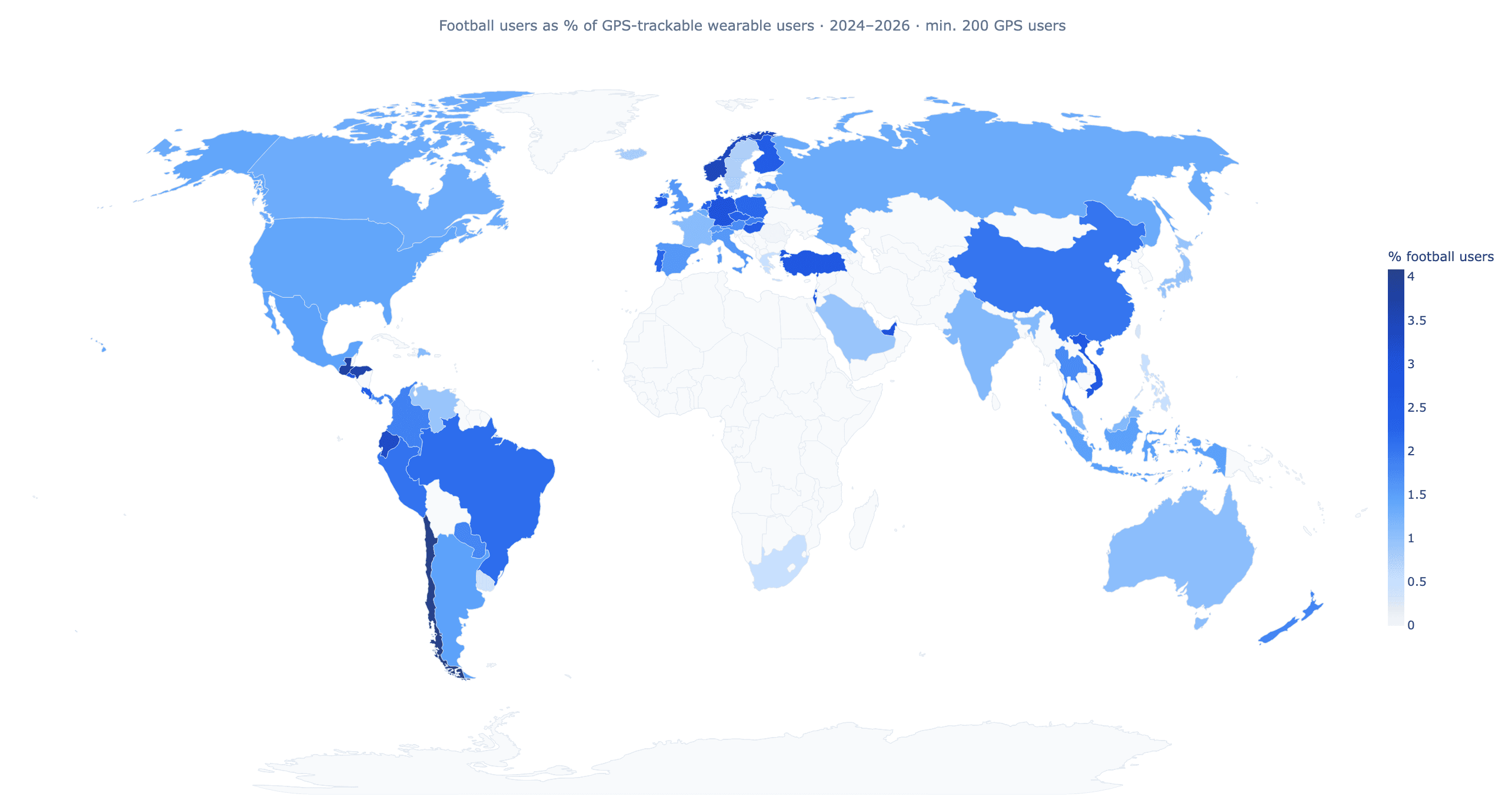
Latin America plays the most football. Chile tops the list with 4.1% of users regularly logging football sessions, followed by Guatemala and Honduras, while the three 2026 World Cup hosts rank surprisingly low.
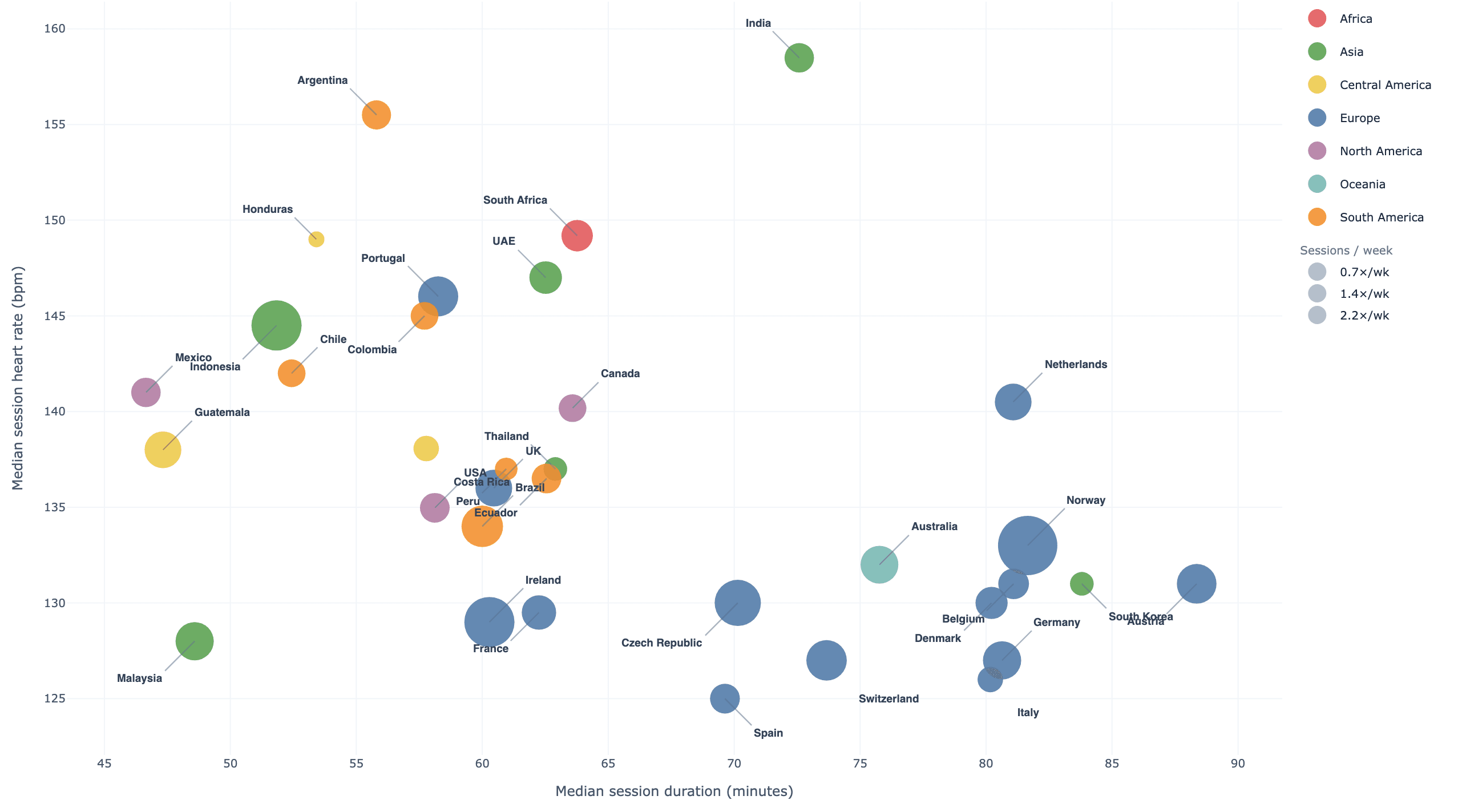
How you play depends on where you are. European sessions are longer and lower intensity, matching full-pitch league football, while Latin American and Asian players log shorter, higher-intensity games that point to smaller-sided, informal play.
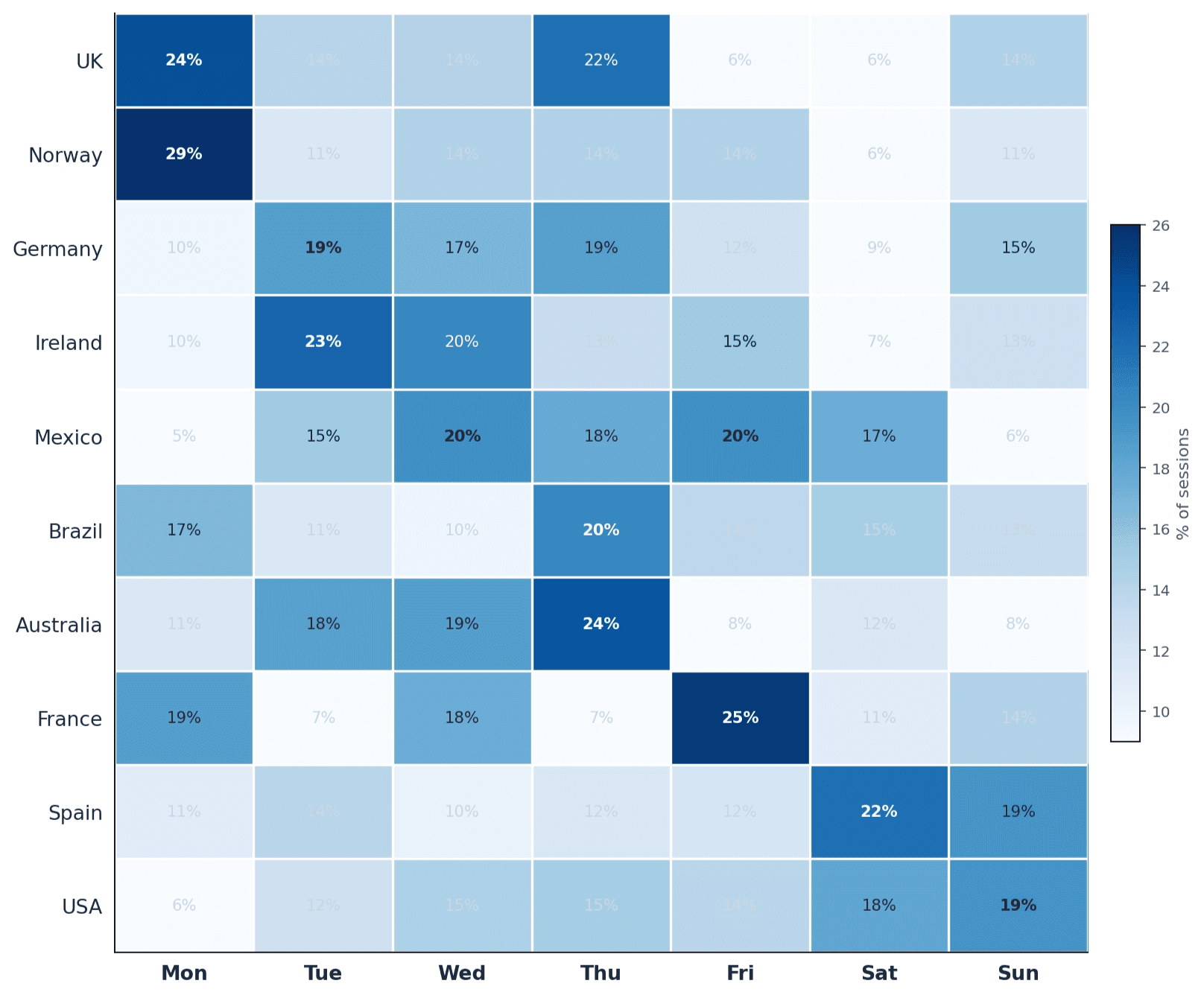
Playing days vary by country. The UK and Norway concentrate their football early in the week, Spain and the USA play mostly at weekends, and Mexico is the most evenly spread of any country in the data.
The World Cup
In the summer of 2026, football is taking over North America. As the World Cup heads to the United States, Canada, and Mexico, it's the first tournament spread across three host nations.
At Terra, we analyzed more than 30,000 football activity sessions globally to understand how different countries train, compete, and build football into weekly life.
Get the latest Terra Research reports and insights every week as soon as they're published.
When we look at football participation as a percentage of all GPS-tracked wearable users, Latin America immediately stands out.
Chile is at the top of the list, with 4.1% of users regularly logging football sessions, followed closely by Guatemala and Honduras. Norway is Europe’s standout football-playing nation, while the three 2026 World Cup hosts sit surprisingly lower.
Figure 1: Football playing users as a percentage of total users per country that manually logged a football activity session.
There’s an important distinction here: countries with the largest football audiences aren’t always the countries where people play the most. Mexico is likely the exception culturally, but wearable adoption and tracking behavior likely skew the numbers lower than expected.
How Different Countries Actually Play
Participation is only half the story. We analyzed how different countries play football and found very characteristic differences across the continents.
European countries tend to cluster around longer sessions with slightly lower average heart rates. That profile looks very much like full-pitch matches and organized league fixtures. Norway is particularly interesting, as it presents some of the highest weekly playing frequency in the data.
Latin American and Asian countries plays higher intensity and shorter sessions. This likely represents smaller-sided matches and more informal play.
The United States and Canada sit somewhere in the middle.
Figure 2: Scatter plot of football sessions average intensity and duration across the different countries. Color codes represent the continents and bubble sizes the average weekly playing frequency.
When Countries Play
Football culture is also about when people play, whether it is organized fixtures, weekend leagues or informal football matches. The heat map below shows the distribution of football sessions across the week for regular players.
Nearly a third of Norwegian and UK sessions happen on Mondays alone, Spain and the USA skew strongly toward weekends, and Mexico displays one of the most balanced weekly distributions in the dataset.
Figure 3: Heat map of most common day of the week to play by country.
The Bigger Picture
The data shows that football culture looks very different depending on where you are.
In Europe, sessions tend to be longer and more structured, likely reflecting organised league play. In Latin America, sessions are generally shorter but more intense, pointing toward smaller-sided and more frequent games. North America currently sits somewhere in between.
That’s part of what makes the 2026 World Cup interesting. The tournament arrives in a region where football participation is still growing, especially in the United States and Canada.
Historically, hosting major tournaments has increased both participation and long-term interest in the sport. Based on the patterns in the data, it’ll be interesting to see whether 2026 shifts how often, and how intensely, people across North America play football in the years that follow.
References
Weed, M., Coren, E., Fiore, J., Wellard, I., Mansfield, L., Chatziefstathiou, D., & Dowse, S. (2015). The Olympic Games and raising sport participation: a systematic review of evidence and an interrogation of policy for a demonstration effect. European Sport Management Quarterly, 15(2), 195–226. https://doi.org/10.1080/16184742.2014.998695
Clemente, F. M., Sarmento, H., & Aquino, R. (2023). Effects of pitch size on soccer players' physiological, physical, technical, and tactical responses during small-sided games: a meta-analytical comparison. (meta-analysis, PMC9806761). https://www.ncbi.nlm.nih.gov/pmc/articles/PMC9806761/
Summary questions
Which countries actually play the most football according to wearable data?
Latin America dominates participation. Chile leads with 4.1% of GPS-tracked wearable users regularly logging football sessions, followed by Guatemala and Honduras. Norway is the European standout, while the three 2026 World Cup hosts — the US, Canada, and Mexico — sit surprisingly lower in the rankings.
Why do the 2026 World Cup host countries rank lower in football participation?
Football fandom and football playing aren't the same thing. The analysis of 30,000+ sessions shows that countries with the largest football audiences aren't necessarily where people play the most. For Mexico in particular, wearable adoption and tracking behavior likely skew participation numbers lower than the cultural reality.
How does European football play differ from Latin American football?
European sessions cluster around longer durations with slightly lower average heart rates — a profile consistent with full-pitch matches and organized league fixtures. Latin American and Asian players show the opposite: shorter, higher-intensity sessions that point to smaller-sided and more informal games. The US and Canada sit between these two styles.
Which country plays football most frequently each week?
Norway. It presents some of the highest weekly playing frequencies in the entire dataset, making it Europe's most active football-playing nation by frequency. Combined with its longer, structured session profile, Norway looks like the most football-saturated country in the wearable data.
What day of the week do people actually play football?
It depends heavily on the country. Nearly a third of all Norwegian and UK sessions happen on Mondays alone, while Spain and the USA skew strongly toward weekend play. Mexico shows one of the most balanced weekly distributions in the dataset, suggesting football is woven into everyday life rather than concentrated in league fixtures.
Does playing smaller-sided football actually mean higher intensity?
Yes — and the data backs it up. Latin American and Asian countries, where informal and smaller-sided matches dominate, log shorter sessions at noticeably higher average heart rates than European league-style play. Meta-analytical evidence on small-sided games confirms that reducing pitch size raises physiological and physical demands per minute.
Can hosting the World Cup actually increase how much people play football?
Historically, yes. Research on major tournaments shows hosting can lift both participation and long-term interest in the sport. With North America's football participation still growing — particularly in the US and Canada, which currently sit mid-pack on intensity and duration — 2026 is well positioned to shift how often and how intensely the region plays.
Can wearable data really capture national football culture?
It captures it remarkably well. By analyzing over 30,000 GPS-tracked football sessions across countries, clear regional signatures emerge: European structure, Latin American intensity, North American hybridity, and country-specific weekly rhythms like Monday-heavy UK play. Session duration, heart rate, frequency, and day-of-week patterns together describe football culture more precisely than survey data ever could.