

Start Receiving Data From Apple Health In 5 Minutes

Apple Health
Enable Apple Health through your Terra dashboard
Select a Wearable
Apple Health
Connect users to your app
0. "active_durations_data":{...}
1. "calories_data": {...}
2. "device_data": {...}
3. "distance_data": {...}
4. "heart_rate_data": {...}
5. "movement_data": {...}
6. "position_data": {...}
Start receiving data from Apple Health on your app or website
How the Apple Health API integration works
- Data delivery
- The Terra mobile SDK reads Apple Healthon the user's device
- Expected latency
- As often as your app runs the SDK, in foreground or background
- Data types
- Activity, Body, Daily, Menstruation, Nutrition and Sleep, normalized by the Terra unified API
- Credentials
- No provider credentials required
Two ways to receive Apple Health data
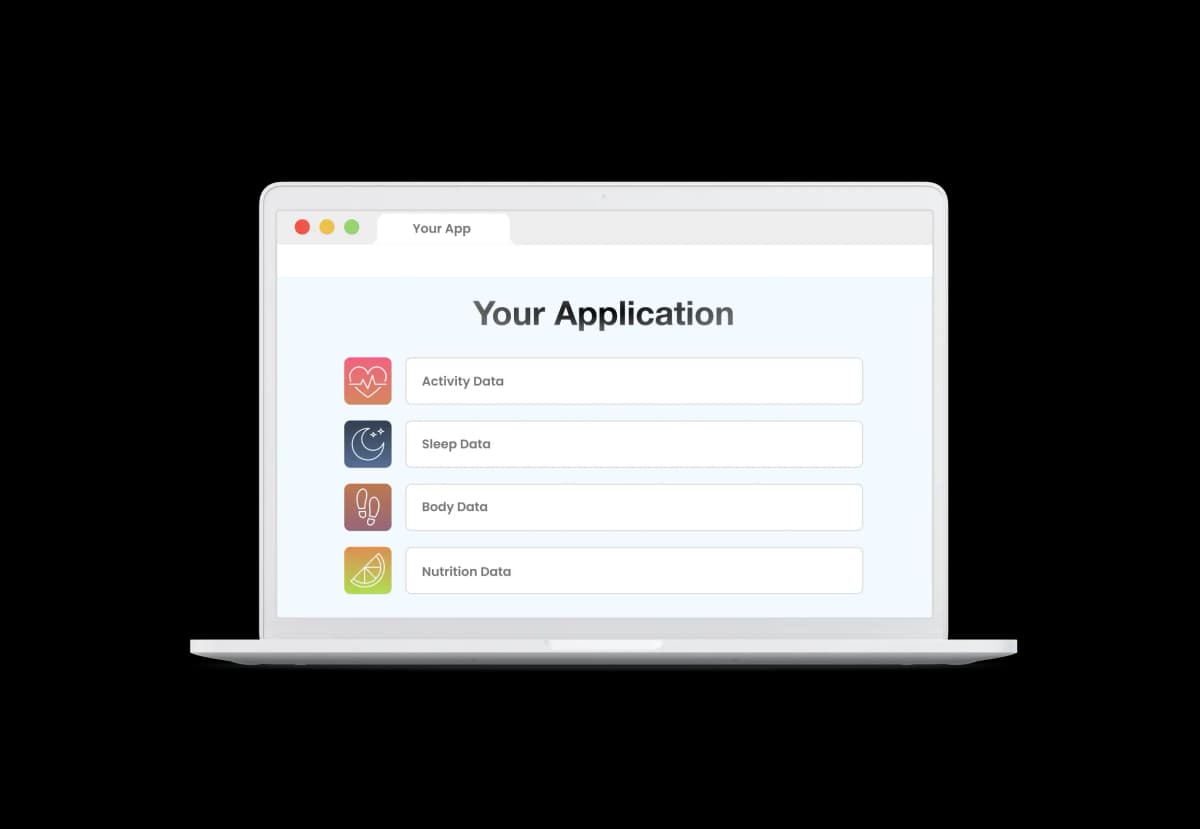
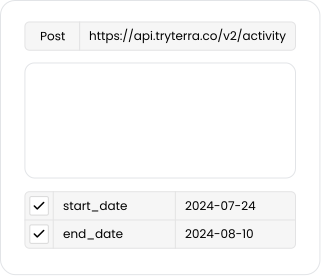
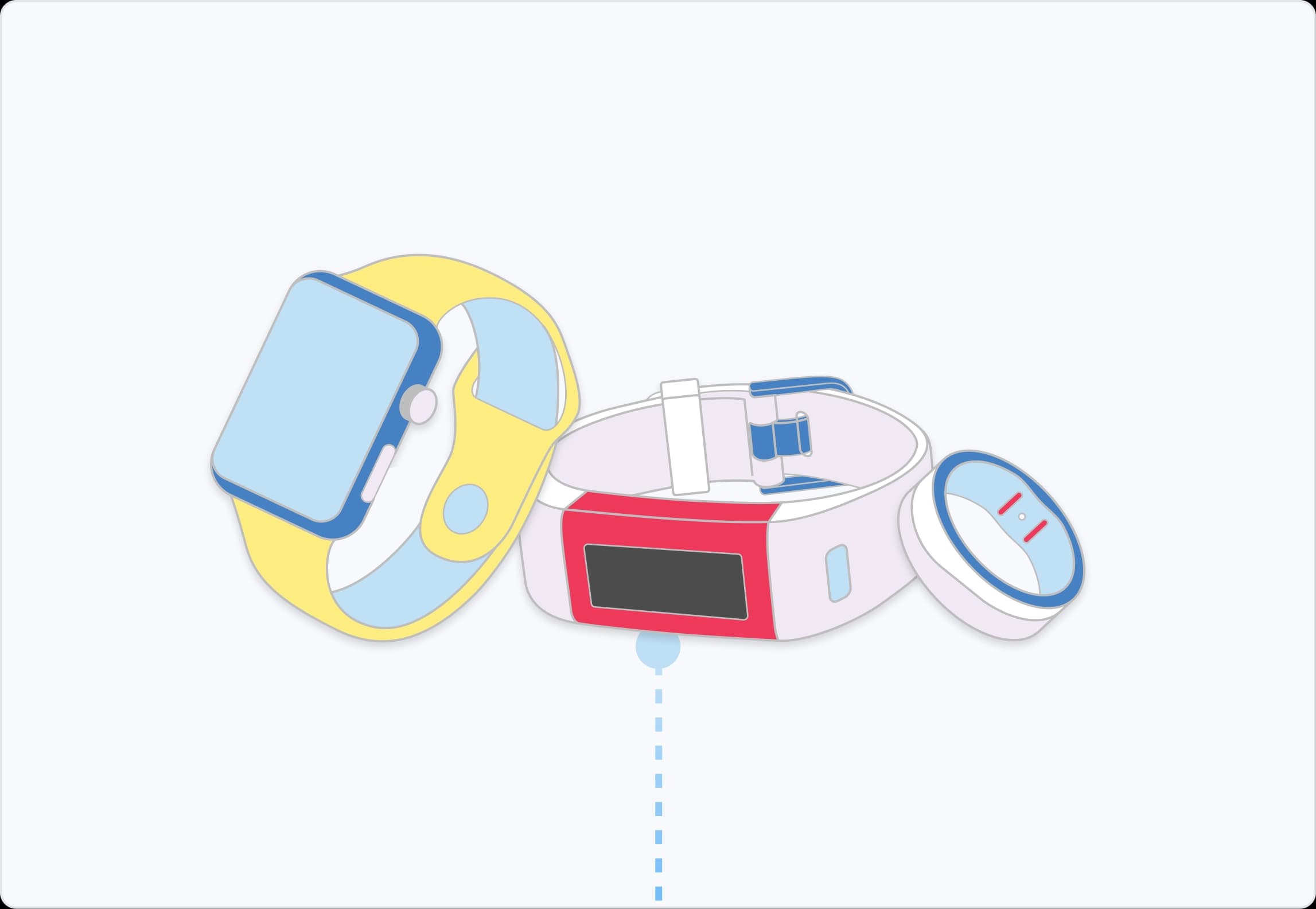
When data is available from an Apple Health user's device, Terra sends it straight to your webhook. During your Terra account setup you'll be prompted for a callback URL, and that is where Terra POSTs each payload.
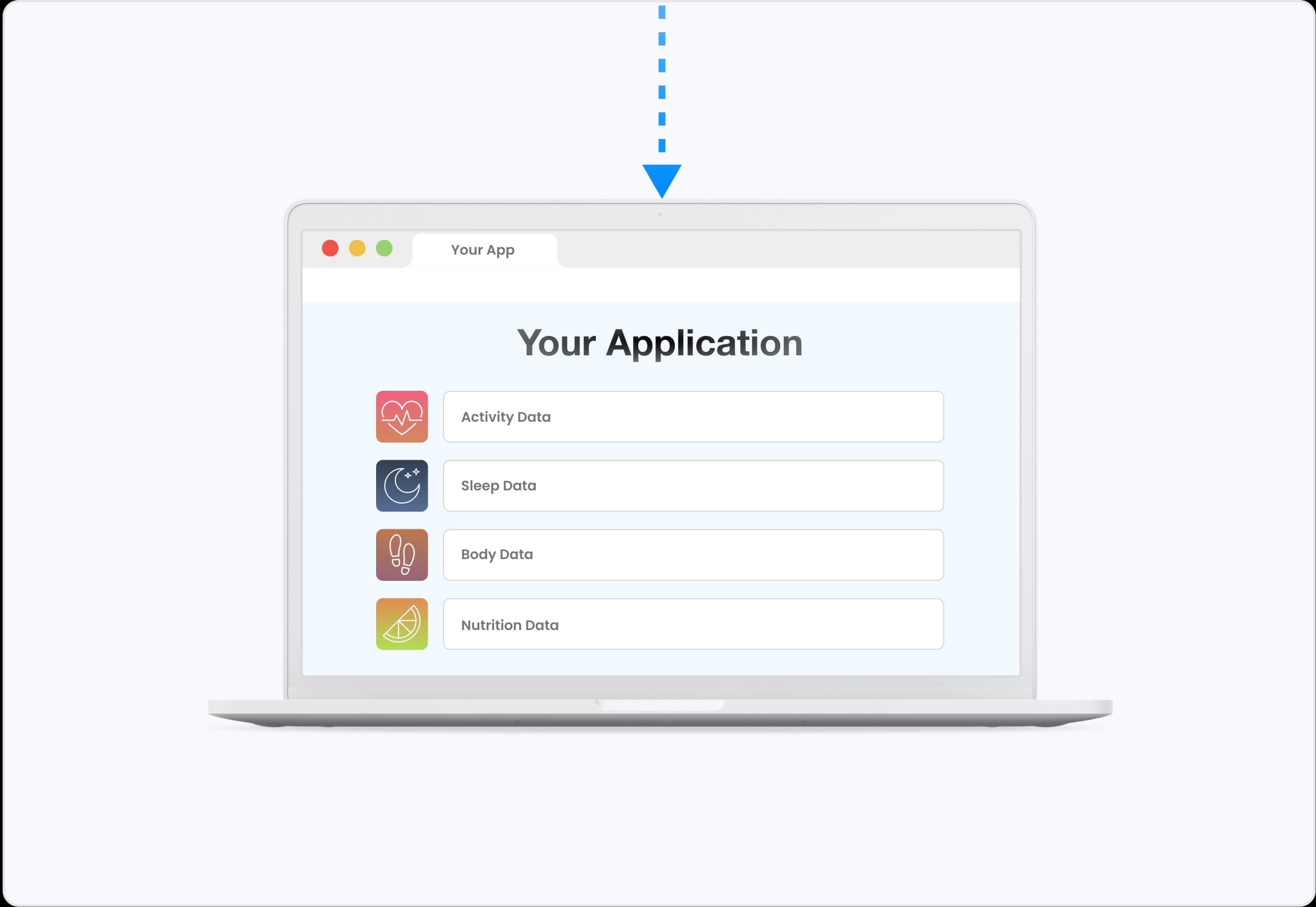
Apple Health data lives on the user's phone, so the Terra mobile SDK reads it there rather than calling a Apple Health server. Terra normalizes each upload and POSTs it to your webhook.
Apple Health's Activity
Payload Preview
Terra API preserves the raw data from the wearable, it just standardizes the units and the json format. It doesn’t augment or change the raw data in any way.
Data is organized into one of 6 data types.
Learn More
Activity Payload (JSON)
{
active_durations_data: { ... }
calories_data: { ... }
data_enrichment: { ... }
distance_data: { ... }
energy_data: { ... }
heart_rate_data: { ... }
metadata: { ... }
movement_data: { ... }
polyline_map_data: { ... }
position_data: { ... }
work_data: { ... }
}
Data can also be sent as a FIT File or with the FHIR Format.
Send Apple Health data to your backend
Terra forwards every normalized payload to the destination you already use. Webhook
 Firestore
 SQL
SQL Mongo DB
 Google Cloud Storage Bucket
 AWS S3 Bucket
 AWS Simple Queue Service
 Kafka
Kafka Supabase
 Azure Blob
People Often Ask Us...
Can't Find Your Question?
What devices are supported?
Terra API integrates with any Apple Health device currently supported by Apple Health.

Terra on Apple Health
Research and writing from the Terra team on Apple Health.
- Blog11 Sep 2026
What I Think of Apple's Health Announcement
Apple just rebuilt the Health app around Health Age, a readiness score, and $119 lab panels. Here's what changed and what it means for companies building with health data.
Alistair Brownlee
- Blog1 Sep 2026
August 2026 product update: per-set strength training data, health context, and a connect widget you style yourself
August 2026: strength workouts arrive set by set on every account, health context predicts missing days with a confidence value, and the connect widget is now yours to style.
Alex Venetidis
- Research6 Jan 2026
Sleep Patterns Across the World
We analyzed 8,298 sleep records from October 2025 across wearable users in North America, Europe, and beyond, linking exercise locations to approximate where people slept. Ireland topped the charts at 7.31 hours with minimal variability, while Indonesia showed the shortest, most variable nights at 5.79 hours. The data reveals how geography, culture, and seasonality shape nightly rest—with Northern Hemisphere countries sleeping longer in autumn while Southern Hemisphere nations showed spring patterns pulling duration down. These population-level insights help refine health models and establish accurate baselines for personalized sleep tracking across borders.
Alistair Brownlee
- Research17 Dec 2025
How HRV Actually Works
We unpack what HRV really is and how it actually works to demystify the data from Apple Watch, Fitbit, and Garmin. Some devices deliver stronger signals for daily recovery (RMSSD), tightly linked to resting heart rate, while Apple produced significantly higher variability by measuring broader autonomic balance (SDNN). The results expose a fundamental metric divide: these devices are speaking different mathematical languages, meaning your choice of wearable determines whether you are tracking training readiness or overall stress.
Alistair Brownlee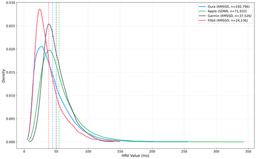
- Blog1 Jul 2026
June 2026 product update: Graphs, health insights in the dashboard, and a rebuilt Streaming API
June 2026: build a chart in the dashboard and embed it in your product, run health insights over a user's data, and a rebuilt Streaming API with a test mode.
Alex Venetidis
- Blog1 Apr 2026
March 2026 product update: choose push or ping delivery, and check what data a user has before you ask for it
March 2026: push or ping delivery mode, a health data coverage endpoint, Dexcom in the EU with a sandbox, and expanded biomarker matching.
Alex Venetidis
- Blog1 Mar 2026
February 2026 product update: backfills now arrive newest first, and planned workouts reach Coros and Huawei
February 2026: backfills now deliver faster for improved onboarding experiences, planned workouts now reach Coros and Huawei, and Apple Health symptom tags are launched.
Alex Venetidis
- Research9 Dec 2025
How Do People Really Use Wearables?
We analyzed 93 days of continuous sleep data across Fitbit, Apple Watch, and Garmin users to answer a simple question: who actually wears their wearable device? While Garmin offers superior data fidelity, our analysis reveals it suffers from the lowest user adherence (69.3%).
Alistair Brownlee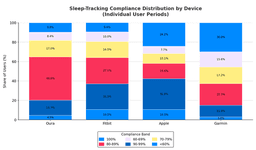
- Research28 Nov 2025
Benchmarking Wearable Sleep Data Reliability
We analyzed sleep data from over 5,000 real-world nights across Apple Watch, Fitbit, and Garmin users. Garmin delivered the longest, most consistent sleep duration with the lowest variability and almost no outliers, while Apple consistently under-reported deep sleep and showed the highest error rates. The results reveal clear winners and losers in wearable sleep-tracking accuracy — and why device choice matters for long-term trends.
Halvard Ramstad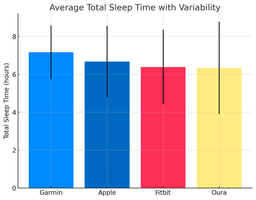
- Blog1 Nov 2025
October 2025 product update: Supabase as a data destination, and athlete profiles from every source
October 2025: Supabase joins Terra's data destinations, athlete profile fields arrive from every mobile SDK, and glucose readings carry the user's own time zone.
Alex Venetidis
- Blog8 Nov 2022
Sleep Stage Comparisons: Apple Watch vs. Polar Unite
Sleep Stage Comparisons: Apple Watch vs. Polar Unite TL;DR The Apple Watch and Polar Unite are found to occasionally match sleep stage data and detect similar times for w
Jacob Bulbul
- Blog31 Oct 2022
Apple vs Oura: Sleep Stage Comparisons
Sleep Stage Comparisons: Apple Watch vs. Oura Ring TL;DR The Apple Watch and Oura Ring detect the same sleep stage fairly often, but there are clear disagreements during
Jacob Bulbul
- Blog13 Oct 2022
HRV Comparisons: Apple Watch vs. Oura Ring
HRV Comparisons: Apple Watch vs. Oura Ring TL;DR Apple Watch and Oura occasionally match average HRV trends over multiple nights, but Oura's readings pick up changes in H
Jacob Bulbul - Blog8 Sep 2022
The new Apple Watch Ultra: Sensors and Data
The new Apple Watch Ultra Apple released their latest watches yesterday, with a new "pro" Apple Watch, called the Apple Watch Ultra, also announced. This is a version of
Jacob Bulbul
- Blog7 Apr 2022
Whoop Syncs Health Data to Apple Health
Whoop Syncs Health Data to Apple Health - All data to the test From the beginning of Terra, our goal has been to connect to as many wearables as possible through one API.
Elliott Yu
Apple Health API alternatives
These integrations also offer Activity, Body, Daily and Sleep data.


Cookie Preferences
Crunch Time: Embrace the Cookie Monster Within!
We use cookies to enhance your browsing experience and analyse our traffic. By clicking “Accept All”, you consent to our use of cookies according to our Cookie Policy. You can change your mind any time by visiting out cookie policy.